What matters most
- Ask the veterinary team to demonstrate bladder expression on your dog, and to watch you do it, before you try this at home.
- A wet bed is not proof the bladder is empty.
- Stop and call if you cannot find or empty the bladder, or if the urine or the skin changes.
Learn this on your dog first
This guide is educational. A veterinarian who can examine your dog should make diagnosis and treatment decisions. Tendi does not diagnose, treat, or cure disease.
Manual bladder expression is a clinic-taught skill. The veterinary team should show you the position, the place to put your hands, the amount of pressure, and the schedule that belong to this dog. Use what follows as a written reminder of that lesson, not as a way to teach yourself from a screen.
If you have not had that demonstration, ask for one before discharge or book a nurse visit. Bladder care for a dog with IVDD explains why leaking can happen while the bladder is still full, and when infection or skin injury is a concern. The steps below do not replace that visit or that page.
If anything here differs from what the team showed you, follow the team.
Signs expression may be needed
Your veterinarian or rehab team is the one who decides that this dog cannot empty well enough on their own. Common reasons they teach expression include a recent spinal injury or surgery, weak or absent hind-end movement, a bladder that stays large after a trip outside, or dribbling that turns out to be overflow.
A useful voluntary urination is usually a stream that starts, flows, and then stops, after which the bladder feels small. Drops in the bedding, a constantly wet coat, or a short trickle can mean the bladder is still holding urine. If you are not sure whether a trip counted, ask the team how they want you to check.
Where the bladder is
The bladder sits in the back half of the belly, in front of the pelvis. When it is full, it often feels like a round, fluid-filled swelling under your hands, sometimes compared to a water balloon. In some dogs it sits farther back, closer to the pelvis, and it can be harder to feel if the belly is tense, painful, or already nearly empty.
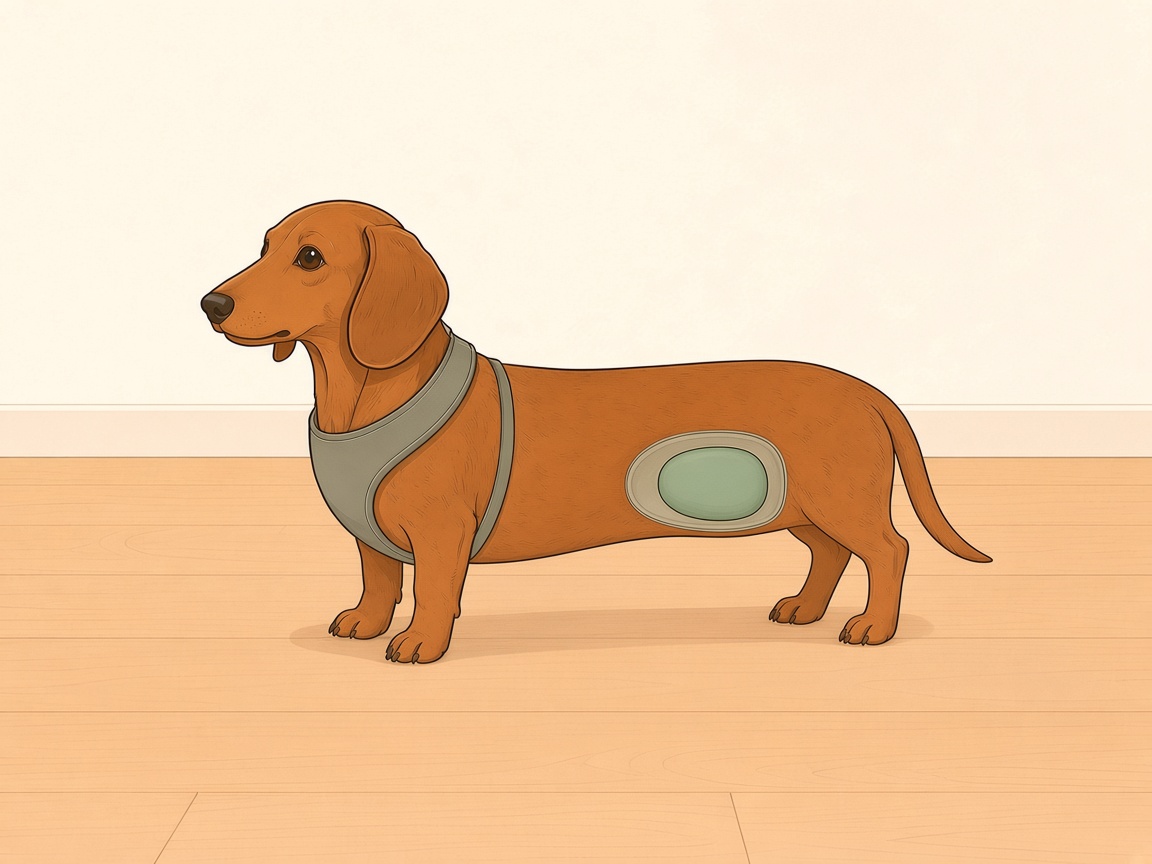
Have the team put your hands on your dog so you know the exact spot. Do not press deeper and deeper looking for it if you cannot feel it and your dog is uncomfortable. Call and ask for another demonstration.
Positions for small and large dogs
Use the position you were taught. Two starting positions are common: standing with support, or lying on one side on a padded surface. Many dogs who are awake prefer to stand. Keep the spine as level and still as the position allows. Do this over a yard, a pad, or a tub so urine has somewhere to go.
For a small dog, the team may have you support the chest and hind end on a table, or hold the dog against you with the belly reachable, sometimes using one hand if that is what they showed.
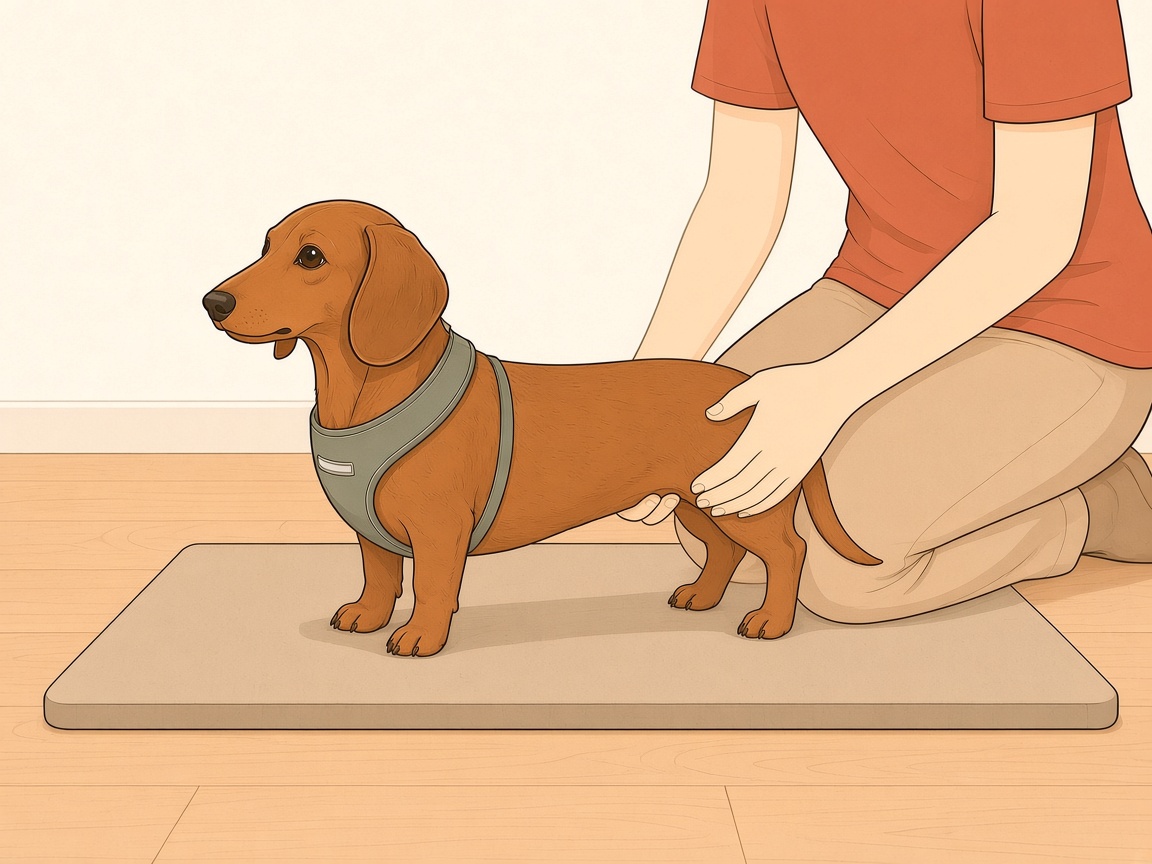
For a larger dog, you usually need two hands around the back of the belly, and often a second person or a wall to keep the dog standing without twisting.
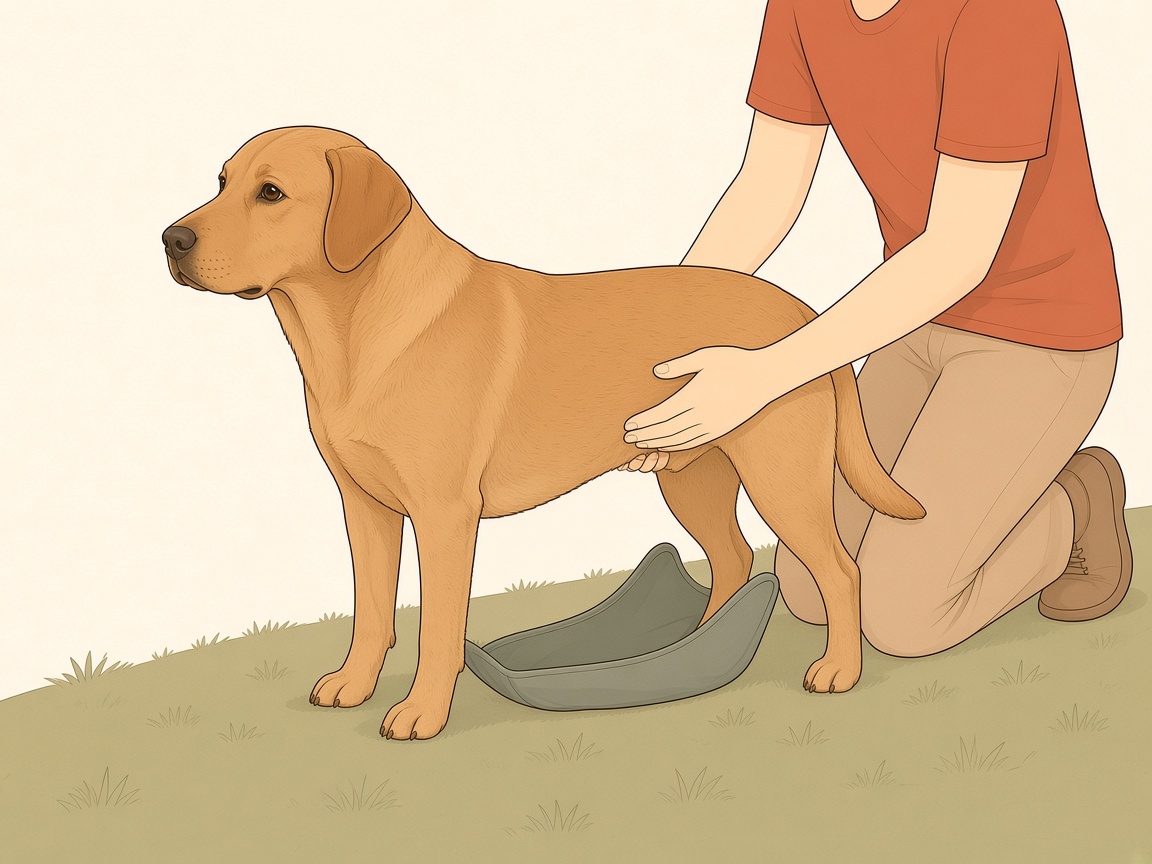
If the taught position is not working at home, do not invent a new one. Ask the clinic to watch you again.
Slow, steady pressure
Once you can feel the full bladder, place your hands the way you were shown, often around the front of that swelling, and apply slow, steady pressure back toward the pelvis with the flat of your hands. The bladder may slip a little as you press. Urine may start as a stream. Keep a constant pressure rather than a poke, a slap, or a squeeze that starts and stops.
If your dog tenses, cries, or tries to fold away from your hands, ease off, let them settle, and begin again more slowly. Never try to overpower a tight belly. Force can hurt, and in a compromised bladder it can be dangerous.
This is not easy at first. It is reasonable to need a second in-person lesson.
How often
Follow the written schedule. Many dogs who cannot empty on their own need this several times a day, and some plans include a night check. Do not skip a planned session because the bed is already wet. Do not add extra hard sessions on your own if the bladder already feels small.
As voluntary urination returns, the team may ask you to feel the belly after a trip to see whether enough urine came out. They may also check residual volume in the clinic. Keep logging times, what you felt, the color and smell, and how hard or easy the session was.
How to tell it is empty
The swelling should feel smaller and softer, the stream should slow and then stop, and it may be hard to find the bladder afterward. If only a trickle comes and the swelling stays large, or if you cannot get any urine and the belly still feels full, stop. Give your dog a rest, and call the clinic the same day. Incomplete emptying can happen even when the technique looks right, which is one reason follow-up matters.
What not to do
- Do not learn this only from a video, a photo, or an article.
- Do not poke with fingertips, bounce the belly, or push harder when your dog is already tense or in pain.
- Do not treat a wet bed as an empty bladder.
- Do not start or stop urinary medicines on your own. Your veterinarian may prescribe something to make expression easier; give only what they prescribe. See IVDD medications: purpose, safety, and tracking.
- Do not keep pushing if you think your dog may have a blockage (straining with no urine, a very painful, hard belly, or sudden distress). That is a reason to seek emergency care, not a reason to try again with more force. See IVDD emergency signs: when to go now.
UTI and urine-scald signs
A bladder that does not empty well is more prone to infection, and urine left on the skin can scald. Call the clinic if the urine becomes cloudy, bloody, or foul-smelling, if expression suddenly hurts or gets much harder, if leaking increases, or if your dog has fever, lethargy, or new discomfort. A smell alone is not a diagnosis; the team may want a properly collected sample.
Check the inner thighs, the belly, and the skin around the prepuce or vulva. Red, raw, or tender skin needs cleaning with what the team approved, thorough drying, and a call if it is spreading. Pads under the dog are usually a better first step than a tight diaper left on for hours. Bladder care for a dog with IVDD and Preventing urine scald and pressure sores cover the medical and skin side in more depth.
When to call the vet
Call the same day if you cannot find the bladder, cannot empty it, or are unsure whether you are doing what you were taught. Call or go in now if your dog cannot urinate, seems in serious pain, has a rapidly swelling or painful belly, or matches the emergency-signs list.
Also call for the urine and skin changes above, or if voluntary urination seems to fade after it had been returning.
A short note on bowel emptying
Stool problems are not treated the same way as a full bladder. Some dogs pass stool on their own once they have a routine. Some teams teach a light cue near the anus to help a dog start. Do not insert objects, manually remove stool, or give an enema unless a veterinarian has specifically trained and directed you to do that for this dog.
Bowel routines, constipation, and cleanup covers constipation, incontinence, cleanup, and when to call. If your dog is straining, has a painful swollen belly, is vomiting, or has gone longer without stool than the team said is acceptable, call rather than improvising a bowel expression.
Before you move on
- Get a hands-on demonstration, and a written schedule, before you express at home
- Use the taught position, find the bladder in the back of the belly, and use slow, steady pressure
- Confirm the bladder feels smaller afterward, and log what you see
- Call the same day if you cannot empty the bladder, or if urine or skin signs change
What caregivers ask
Can I just follow a video if we could not get a nurse visit?+
No. The hand position and the safe amount of pressure are specific to your dog. Ask the clinic to demonstrate, even if that means a short return visit, before you start at home.
How many times a day do we have to do this?+
As often as the written plan says. Many dogs who cannot empty on their own need several sessions a day. Do not borrow another dog's schedule.
What if I can feel the bladder but almost no urine comes out?+
Stop if you have already used slow, steady pressure and the swelling is not getting smaller, or if your dog is tense or painful. Call the same day. The team may need to check residual urine, change the position, or consider other ways to empty the bladder.
Is a wet bed a good sign?+
Not by itself. Overflow can wet the bedding while the bladder stays full. Feel for the bladder the way you were taught, and keep to the schedule.
Do we also have to express stool?+
Only if the veterinarian has taught and directed a specific bowel technique for this dog. Do not copy bladder technique on the colon. See Bowel routines, constipation, and cleanup.
Our dog had IVDD surgery. Does that change how we express?+
The need for expression is still a team decision, and the spine still needs to stay supported and still. For the rest of post-op nursing, see Home care after IVDD surgery and Crate rest after IVDD surgery.
Sources & further reading
We favor peer-reviewed consensus guidance and established veterinary specialty organizations. Links open the original source.