What matters most
- Follow the written discharge sheet, and keep to the medication schedule your veterinarian gave you.
- Check the incision daily, keep it clean and dry, and use a cone if your dog can reach the site.
- Support short potty trips, watch bladder and bowel function, and call for the red flags on your sheet.
Start with the discharge sheet
This guide is educational. A veterinarian who can examine your dog should make diagnosis and treatment decisions. Tendi does not diagnose, treat, or cure disease.
The first days at home are about nursing, rest, and close watching, not a return to normal life. IVDD surgery: decisions, day-of care, and questions to ask covers the operation and the questions to ask before discharge. Crate rest after IVDD surgery: what changes once your dog comes home covers how the recovery space itself changes after an incision, including setup, the cone, and why rest still matters when your dog seems more comfortable.
The sections below cover the day-to-day home-care list that sits beside those two: medicines, the incision, sling-supported toilet trips, food and water, sleep, what progress often looks like, red flags, and rechecks.
If anything here differs from the discharge sheet or from what the surgical team showed you, follow the team.
Pain medicine and keeping to the schedule
Give only the medicines written on the discharge sheet, at the times written there. That includes overnight doses if the sheet includes them. Looking more comfortable is not a reason to skip a dose or stop early.
Set alarms, and keep a simple log of what was given and when. If a dose is missed, spit out, or vomited, call the clinic for instructions. Do not add leftover medicine from another illness, and do not give human medicine unless the veterinarian has prescribed that exact product for this dog.
If pain seems worse, or if you notice new drooling, vomiting, diarrhea, unusual sleepiness, or restlessness after a dose, call. IVDD medications: purpose, safety, and tracking explains how to run a safe system at home. How to recognize and track pain during IVDD recovery covers quiet signs of pain.
Incision care
Once a day, in good light, look at the incision without touching it unless your team has asked you to clean it in a specific way. The edges should stay together. The skin may look a little pink at first. Keep the site clean and dry. Do not put ointments, sprays, powder, or home products on it unless they were prescribed for this incision.
Do not bathe or swim your dog until the team says the incision can get wet. If your dog can lick or chew the site, keep the cone on except when the team has said it can come off for a short, supervised moment.
Call the surgical team if you see increasing redness, swelling, heat, discharge, a bad odor, edges that are opening, a new soft swelling, or pain at the site. A little bruising can appear in the first days, but a change that is getting worse is worth a call rather than a wait.
Sling-assisted potty trips
Toilet breaks are usually the only planned time out of the recovery space. Keep them short and calm. Carry a small dog with the spine level, or walk a larger dog slowly on a short leash, with the support the team demonstrated.
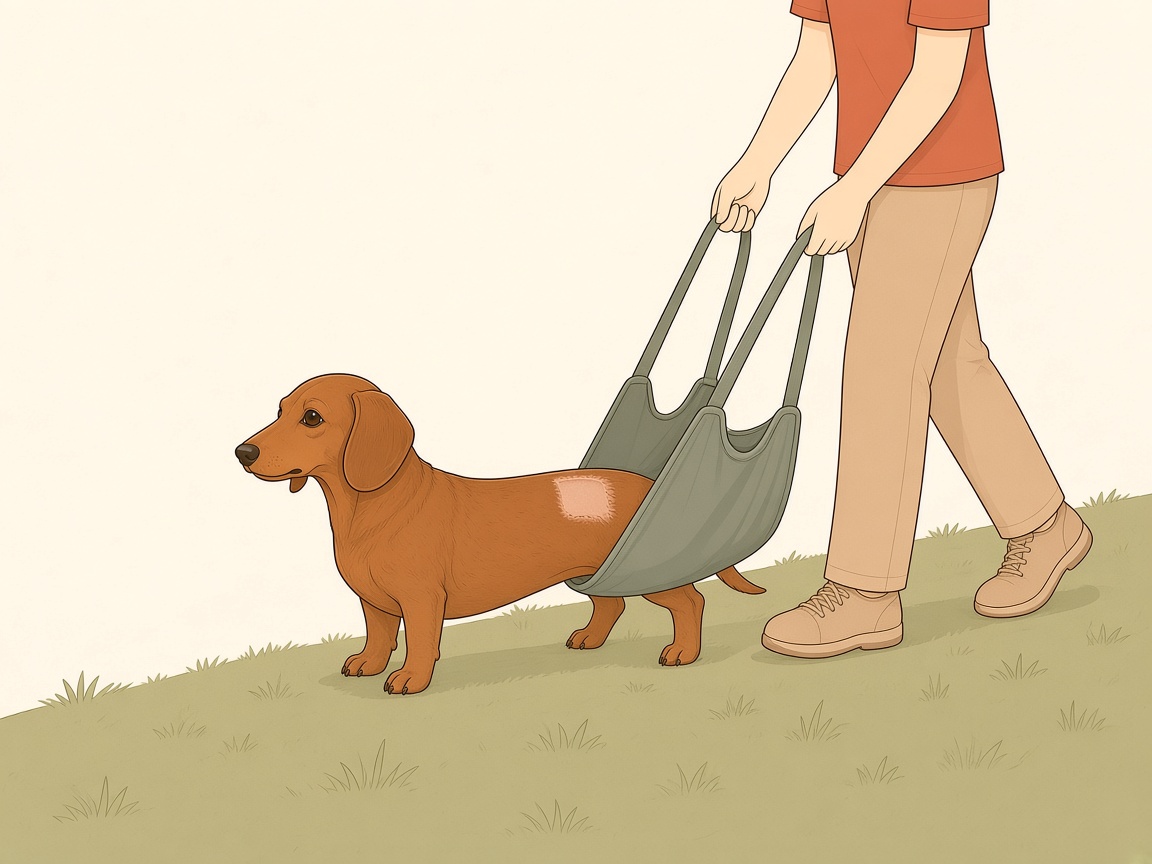
If your dog's hind end is weak, a folded towel or a sling under the belly, in front of the hind legs, is a common way to take some weight while the back feet still find the ground. Ask the team to show you the height and the path. Do not use stairs, off-leash time, or a yard run as a toilet trip.
How to lift, carry, and transport safely and How do potty breaks work during IVDD crate rest? cover the lift and the routine. Harness or sling for supporting an IVDD dog? helps you tell those tools apart. For how those trips fit the post-op crate, see crate rest after IVDD surgery.
Watch what comes out. A wet bed is not proof the bladder emptied. If the team taught you to check or express the bladder, stay on that schedule. See Bladder care for a dog with IVDD and, if expression was demonstrated, How to express a dog's bladder. For stool, constipation, and cleanup, see Bowel routines, constipation, and cleanup.
Feeding and water
Keep water where your dog can reach it without climbing or twisting, as long as they can lift their head safely. Offer the diet on the discharge sheet, or your dog's usual food if the team said to continue it. A smaller appetite on the first day home is common. Call if your dog will not eat, vomits more than once, or seems nauseated and uncomfortable.
After neck surgery, bowl height and a chest harness often matter more than they do after back surgery. Those setup details live in crate rest after IVDD surgery. For longer-term eating and body condition, see Nutrition and weight during IVDD recovery.
Sleep and comfort
Give your dog a quiet, level place with padding thick enough that bony points are not pressed into a hard floor, and with a washable layer you can change when it is wet or soiled. If your dog cannot turn, change their position as the team showed you so one side is not loaded for hours. Keep urine and stool off the skin, and dry the coat after you clean it.
Do not let your dog jump onto furniture or follow you through the house because they want to be near you. Bring the recovery space to where you are, or sit with them where they already are. Preventing urine scald and pressure sores covers skin checks in more detail.
How progress usually looks
Some dogs seem much brighter within a few days, while the incision and the spinal cord still need weeks. Feeling better is not the same as healed, and it is not a reason to ease rest. Walking, if it returns, is often slow and uneven at first. Progress is also not always a straight line. An IVDD recovery timeline: milestones, not deadlines and IVDD recovery setbacks: what is normal vs when to call give that longer view.
Do not add strengthening, stretching, or other home exercises until the surgeon or a rehab veterinarian has cleared them and shown you the work. Home exercises: what to do only after clearance and Core and back strengthening after IVDD recovery are for that later phase. Veterinary rehabilitation after IVDD explains when a rehab plan may start.
Red flags
Call the surgical team the same day, or go in now if the discharge sheet or IVDD emergency signs: when to go now says to, if you see:
- Rapidly worsening weakness, loss of walking, or severe pain
- No urine, a bladder you cannot empty if expression was prescribed, or a painful, swollen belly
- Incision edges opening, spreading redness, pus, or a sudden painful swelling at the site
- Repeated vomiting, collapse, pale or gray gums, or trouble breathing
- A dog who will not settle, cannot get comfortable, or seems suddenly far worse than at discharge
Rechecks
Keep the visits already booked, even if home is going well. Many teams want a wound check or suture removal in the first one to two weeks, and a later exam before they change activity limits. Your surgeon sets those dates, and may choose a longer rest period than a neighbor's dog had.
Is 4 weeks of crate rest enough for IVDD? explains how that later checkpoint usually works. Until the team eases the plan in writing, keep the same limits you were sent home with.
Before you move on
- Keep to the written medicine schedule, and log each dose
- Look at the incision daily, and keep it dry
- Use short, supported potty trips, and stay on any bladder plan you were taught
- Go to rechecks, and call early for the red flags on your sheet
What caregivers ask
When can we loosen crate rest because our dog already seems more like themselves?+
When the surgeon says so, usually at a planned recheck, and not before. Comfort and a wobbly walk are not the same as a healed surgical site. See crate rest after IVDD surgery.
What if we miss a dose of pain medicine?+
Call the clinic and ask what to do for this medicine and this timing. Do not double the next dose on your own, and do not skip the rest of the day to "catch up" unless you are told to.
Can we bathe the incision or put cream on it?+
Not unless the team has said to. Keep the site dry, and use only products they prescribed for this incision. Ask at the wound check if you are unsure.
Our dog is not peeing on the walks. Is that an emergency?+
It can be. A wet crate is not proof of a good empty. If your dog cannot urinate, if you were taught to express and cannot, or if the belly seems painful and full, call the same day and follow emergency-signs if your dog is in distress.
When do strengthening or rehab exercises start?+
Only after the surgeon or a rehab veterinarian clears them. Early home strengthening is not a default part of the first days. See Home exercises: what to do only after clearance and Core and back strengthening after IVDD recovery.
Sources & further reading
We favor peer-reviewed consensus guidance and established veterinary specialty organizations. Links open the original source.