What matters most
- Get written clearance, and connect with a rehab or orthopedic veterinarian if you can, before you start a strengthening program.
- These exercises are a prescription for this dog and this phase, not a generic checklist and not a replacement for rest when rest is still required.
- Stop if you see pain, knuckling, trembling, panting, loss of form, or a change in walking or urination, and contact the treating team.
Start with the people who set the plan
This guide is educational. A veterinarian who can examine your dog should make diagnosis and treatment decisions. Tendi does not diagnose, treat, or cure disease.
Strengthening the muscles that support the back and hind end can be part of recovery after IVDD, but only when your veterinarian says this dog is ready. Muscle loss from a long rest period is a real concern, and so is starting too soon or copying a routine that was meant for a different dog.
If you can, work with a veterinarian who has rehabilitation training, or with a credentialed canine rehabilitation professional working under veterinary supervision. Ask for the exact position, support, surface, number of repetitions, and stop signs. Veterinary rehabilitation after IVDD explains what that team is for. Home exercises: what to do only after clearance covers how to dose work and watch form. The sections below cover the named strengthening exercises caregivers hear about most, and when they usually fit.
If anything here differs from the written plan, follow the plan.
What Erinn would tell other caregivers
In Phaser's story, Erinn describes what she would tell other caregivers:
Strengthening after recovery. Connect with a rehab or orthopedic vet if you can, and work on strengthening. "I've noticed a significant improvement in his movement and his day to day sort of aches and pains" from a modified fitness program aimed at his back muscles. "A lot of people, once their dog recovers, they're just super afraid to let them do anything, but that muscle atrophy can actually be worse for their spine in the long run."
That is her experience with Phaser, not a program to copy and not a promise about how another dog will feel. Your veterinarian or rehab veterinarian still decides whether strengthening is appropriate, which exercises to use, and when to start.
When strengthening usually starts
Clearance after crate rest is a starting line, not a return to normal freedom. After crate rest: how to restart activity safely covers the first controlled walks, how to increase one variable at a time, and when to pause.
Clinic research often begins assisted standing or weight shifting under trained staff once a dog can bear some weight, including in the early days after surgery. That is not a home start date. At home, wait for a written plan. During strict crate rest, do not add strengthening just because a video or another caregiver started earlier.
A useful plan names which exercises are cleared now, which ones should wait, what support to use, and what would send you back to a more limited routine.
How to practice at home
Use a quiet, nonslip area. Keep the spine as level as the exercise allows, and give only enough support to produce the movement your clinician showed you. Short, clean sessions are more useful than one long session that falls apart at the end.
Change only one thing at a time when you are allowed to progress: the number of repetitions, the duration, the surface, the support, or the task. Film a repetition if your rehab team wants to check form. Log the dose and how your dog looks later that day and the next morning.
Stop a set if your dog trembles, knuckles, crosses or drags a limb, collapses into a sling, pants hard, resists, or loses the shape of the movement. New pain, weaker walking, or a change in urination is not ordinary workout soreness. Stop and call the treating team. Rapidly worsening weakness, loss of walking, severe pain, or inability to urinate needs emergency veterinary assessment. See IVDD emergency signs: when to go now.
Weight shifting
Weight shifting is a slow lean, side to side and then front to back, while your dog stands as evenly as possible. The aim is more even weight-bearing and more work from the trunk, not a stumble.
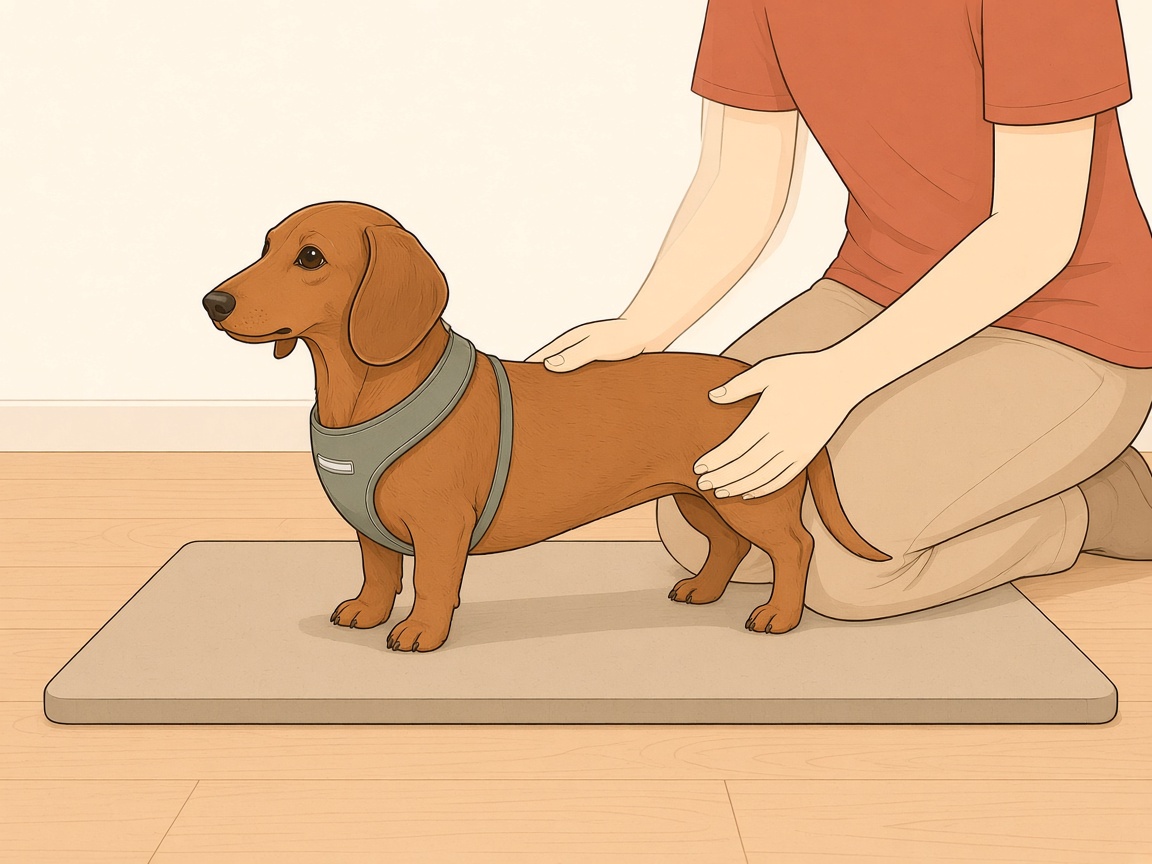
How to do it, when it is cleared: stand your dog on a solid, nonslip surface, with a sling or your hands ready if the plan calls for support. Place your hands over the hips, the shoulders, or both, and apply light pressure so the body sways a little in one direction and then the other. You can also use a treat to invite a lean, but do not let your dog sit or step away. Both sides should keep some weight. Do not push hard enough to make your dog lose balance.
Typical starting point: your rehab veterinarian sets the number of slow sways and how often to repeat them through the day. A few clean leans with a pause in the middle are enough at the start. Progress, if prescribed, stays on a solid floor for a while, then may move to a slightly softer but still level surface, not straight to a wobble board.
When it fits: once your dog can stand, with the support in the plan, and the team has asked for this work. It is often one of the earlier standing exercises in a rehab program.
When to stop: pain, panic, a foot lifting or sliding, trembling, knuckling, or a back that rounds or twists as you press.
Sit to stand
A sit to stand is a square sit followed by a stand that is powered by both hind limbs. It is used to strengthen the rear and the trunk for a movement your dog already needs in daily life.
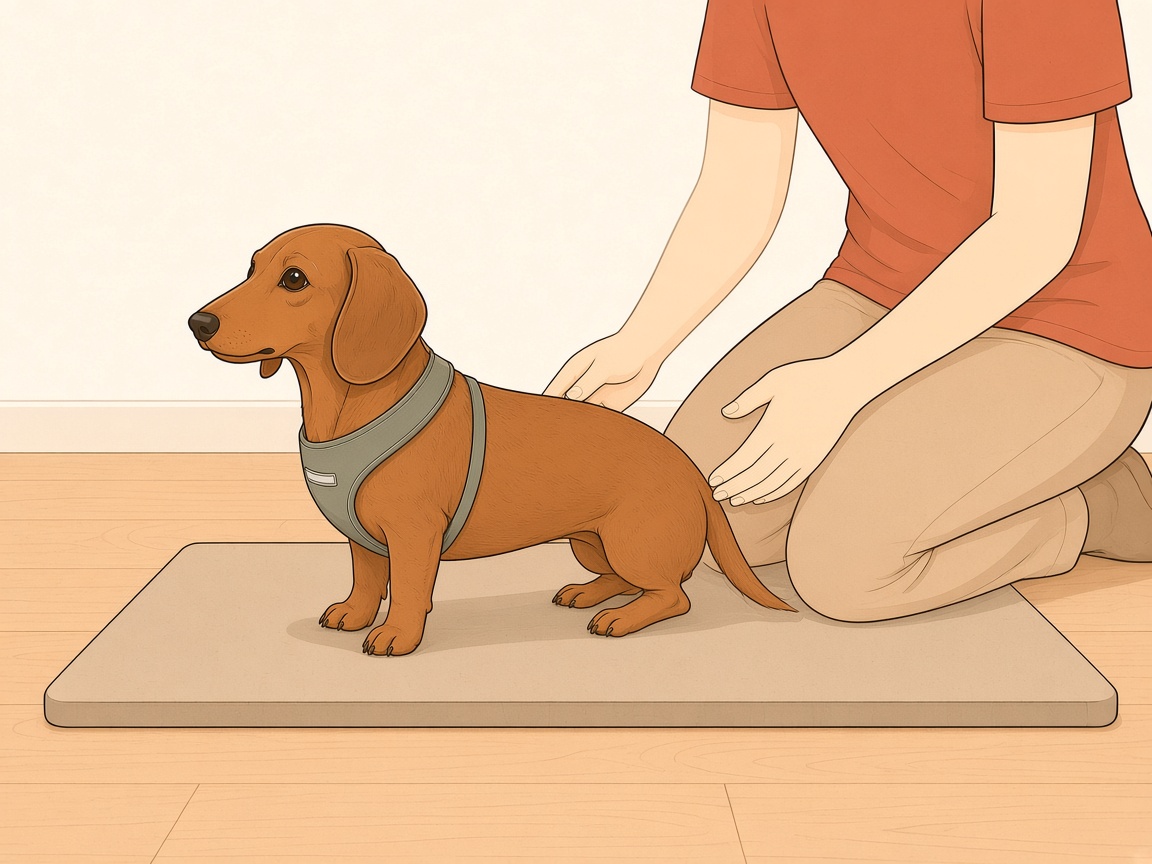
How to do it, when it is cleared: on a nonslip surface, ask for a square sit, with both hind feet tucked under, not with one leg kicked out to the side. Then ask your dog to stand by pushing the rear up and forward, not by pulling the body up with the front limbs. If one hind leg slides out, have your dog stand and sit again, or sit with that side lightly toward a wall so the leg cannot escape. Take a step or two only if the plan includes it, then sit again.
Typical starting point: the rehab veterinarian sets the number of clean repetitions and how many sessions to do in a day. A small set of good sits and stands, then rest, is a common starting shape. Do not add more repetitions if the sit becomes crooked or the stand turns into a front-end pull.
When it fits: after your dog can sit and stand without collapsing, and only when this movement is cleared. It is usually later than basic supported standing.
When to stop: a crooked sit you cannot reset, pulling up with the front only, trembling, knuckling, pain, or refusal.
Three-leg stands
A three-leg stand is a brief lift of one paw so the other three limbs and the trunk have to rebalance. It is a standing balance and strengthening task, not a stretch.
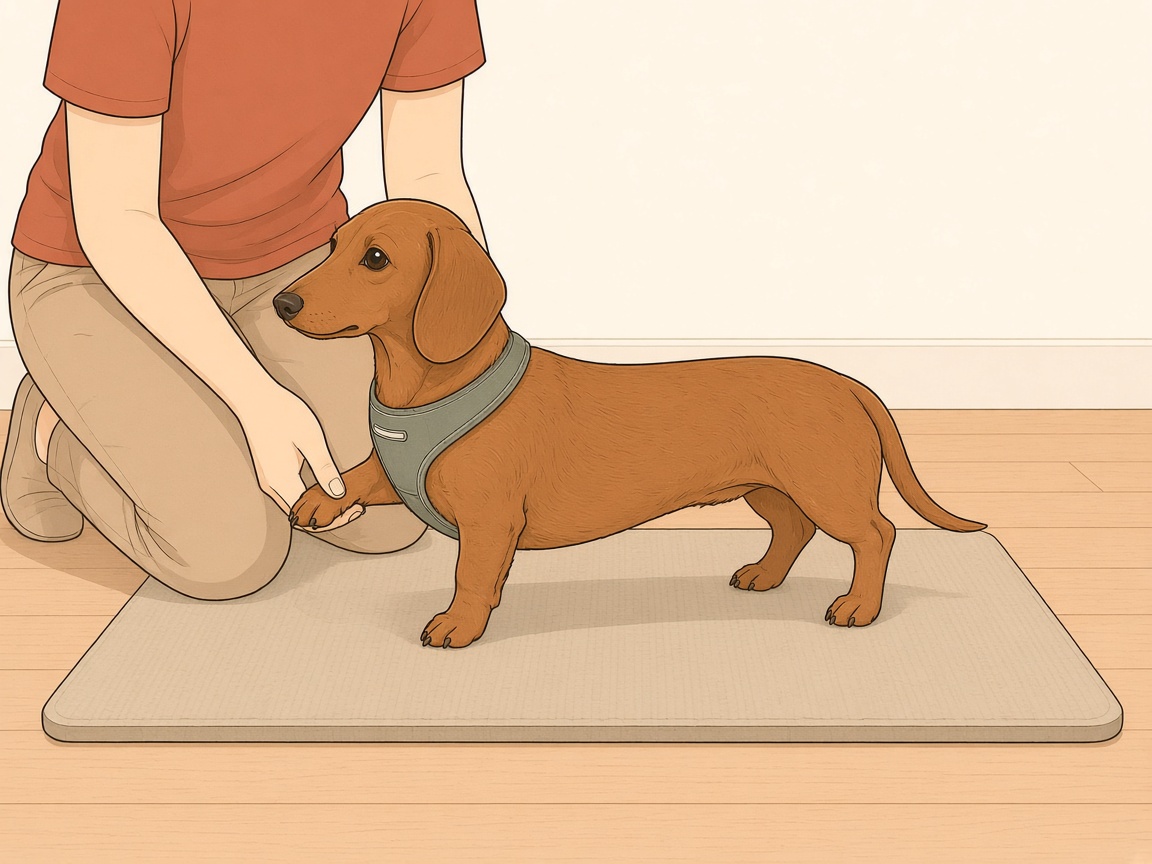
How to do it, when it is cleared: start with the limb your dog lifts more easily, unless the therapist has told you to skip a limb. Lift the paw only a little, along its normal path. Do not twist the leg outward or lift it so high that the back shifts to compensate. Keep your hand from becoming a perch; the paw should not rest on you. Hold about three to five seconds, or whatever hold your clinician set, then lower the paw slowly and let your dog settle before the next lift. Stay close enough to catch a wobble.
Typical starting point: a short hold and a small number of lifts per limb, as written in the plan. Do not move to lifting two legs, or to doing this on a soft surface, until the team says so.
When it fits: after a steady, square stand on solid ground, and after weight shifting is comfortable if that was part of the plan.
When to stop: the back shifts or rounds, hopping, knuckling, trembling, pain, or a foot slammed down.
Cavaletti poles
Cavaletti work is a slow walk over a line of low poles, used to practice paw placement and a more deliberate stride. The poles are a guide for stepping, not a jump rail.
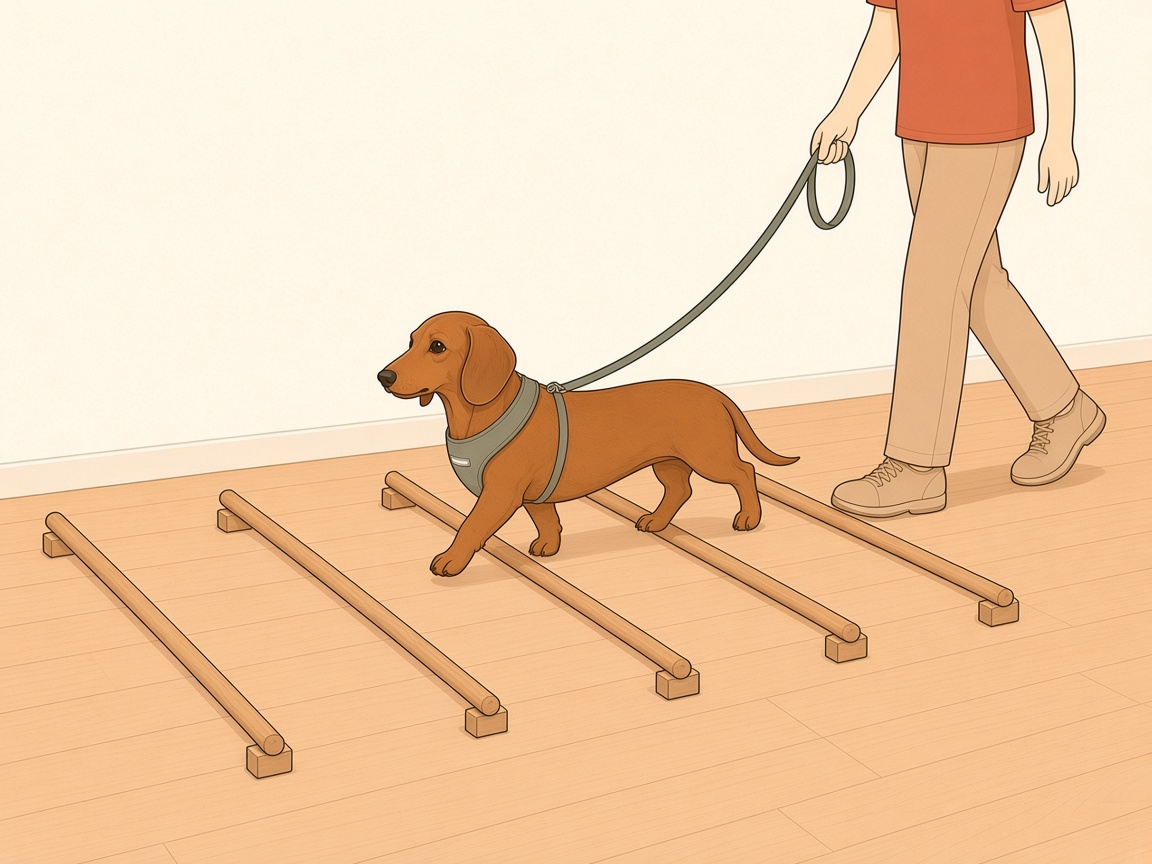
How to do it, when it is cleared: set the line on a nonslip surface. For a first setup, many rehab plans start with poles on the ground, or no higher than the ankle, spaced about one body length apart so one paw lands between them. Walk your dog through slowly, on a harness and leash or with the support the plan names. Ordinary poles or broom handles are enough; you do not need a special kit.
Typical starting point: a short line of a few poles, once or twice through, if form stays clean. If the team later allows progress, they may narrow the spacing a little or raise the poles slightly. Do not speed up, and do not turn the line into jumps, bounce patterns, or a circle of obstacles.
When it fits: when your dog can walk in a controlled, straight line with the prescribed support, and stepping work has been cleared. It does not belong in strict crate rest.
When to stop: toe dragging, hitting every pole, rushing, jumping the poles, pain, or a walk that is no longer slow and straight.
Slow incline walks
A slow walk up a shallow slope asks the hind limbs to work more than the same walk on flat ground. It is still a controlled walk, not a hike and not a stair workout.
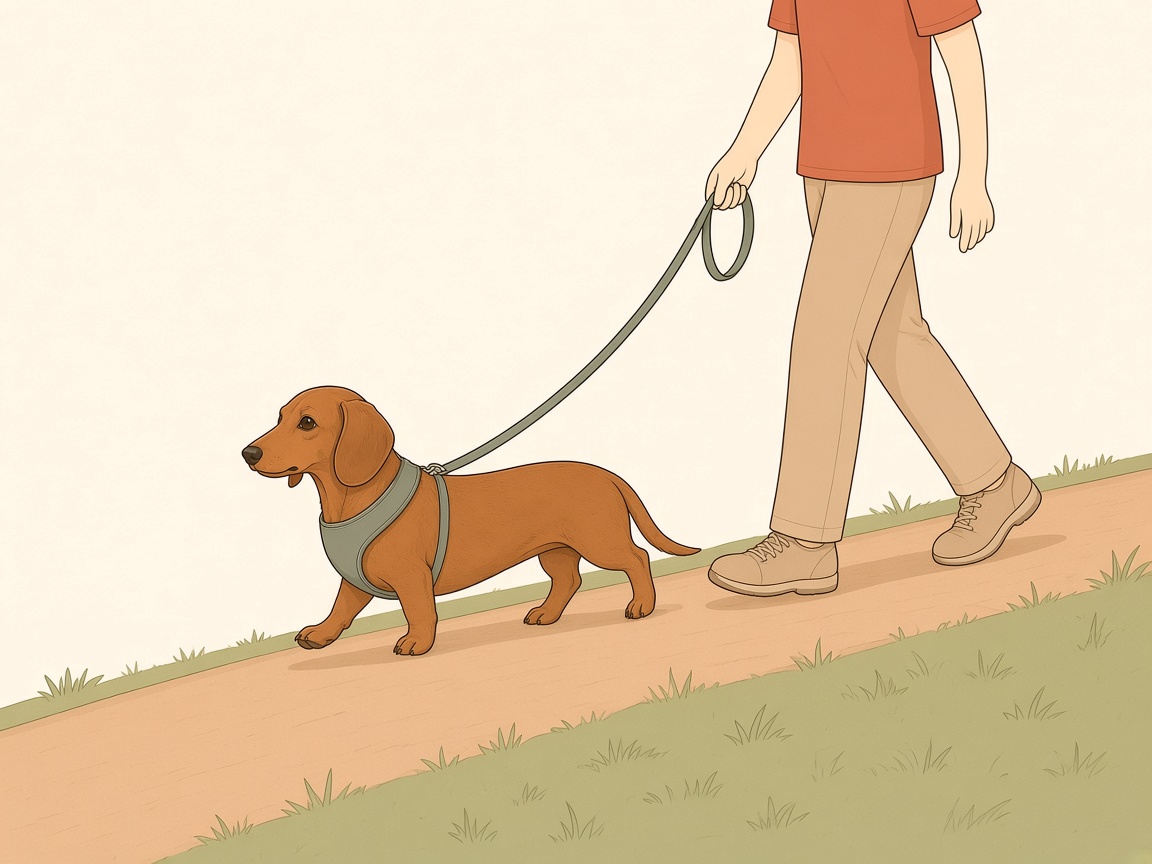
How to do it, when it is cleared: use a harness, keep the pace slow, and choose a shallow slope, not a staircase. Some dogs start by standing on a slight incline, then take a short walk up. Keep the line straight. Walking down can be harder, because the hind limbs have to reach under the body, so wait for a specific OK before you add downhill work.
Typical starting point: a shorter, slower pass than your usual flat walk, then rest and a look at form later in the day. Increase duration or slope only when the written plan says so, and only one of those at a time.
When it fits: after flat, controlled walking is comfortable and this surface has been cleared. See After crate rest: how to restart activity safely for how walk dose fits the rest of the week.
When to stop: scrambling, bunny-hopping, knuckling, pain, rushing, or any setup that requires unmanaged stairs.
Balance pads and other unsteady surfaces
A slightly soft or unsteady but level surface can make a square stand more demanding. It is a later balance tool, not a starting surface.
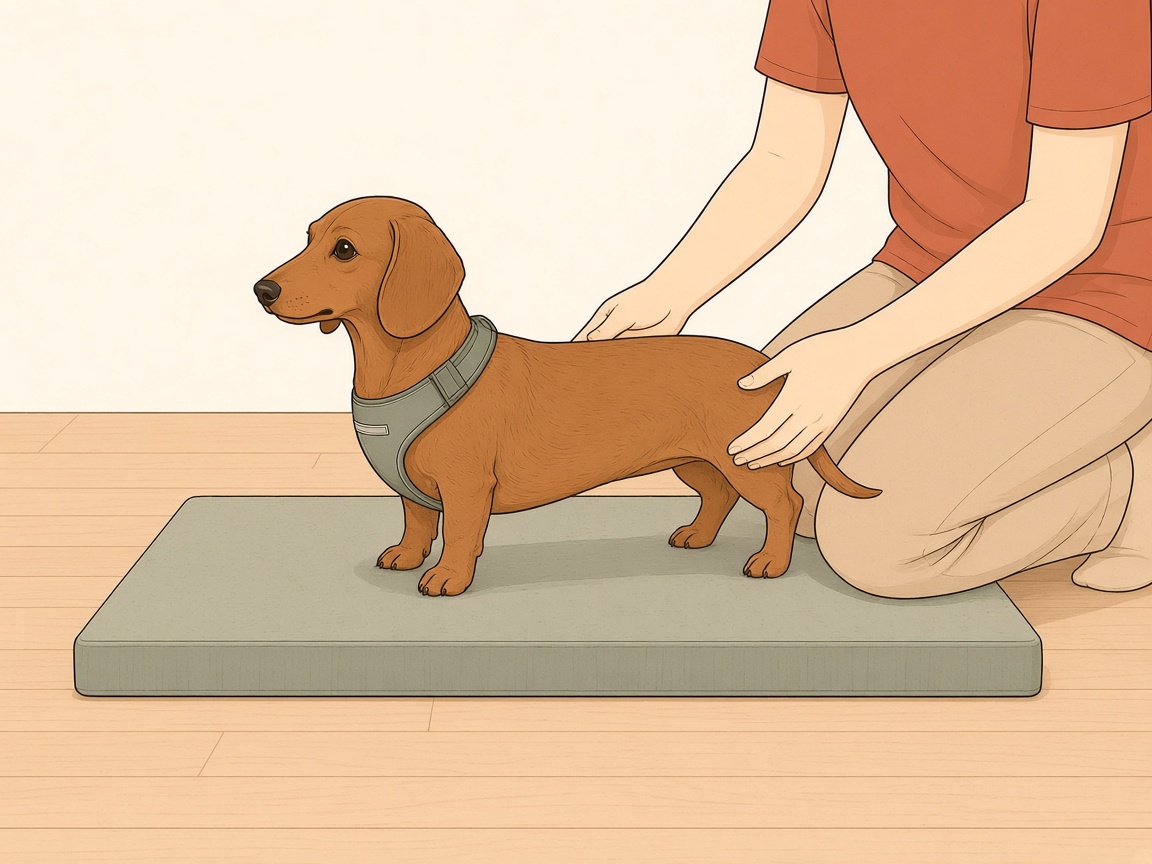
How to do it, when it is cleared: first confirm that your dog can stand steadily on the floor and complete any weight shifting or three-leg work already in the plan. Then, if prescribed, use a flat pad or cushion that cannot slide, on a nonslip floor, with your hands ready. Start with all four feet on, and a short stand or a few slow weight shifts. A board that tips in many directions, or a setup with each foot on a different surface, is a harder clinic-level task unless your rehab veterinarian has shown you that exact work.
Typical starting point: brief, spotted holds. Do not lengthen the hold or add treats that turn the stand into a twist until the plan says so.
When it fits: mid to later strengthening, and only when prescribed. Skip it if your dog cannot hold a square stand on solid ground.
When to stop: stumbling, panic, feet sliding off, a rounded or twisted back, pain, or fatigue.
Underwater treadmill
An underwater treadmill is a clinic tank in which your dog walks on a treadmill in water. The team sets the water height, the speed, and the time, and watches paw placement and fatigue.
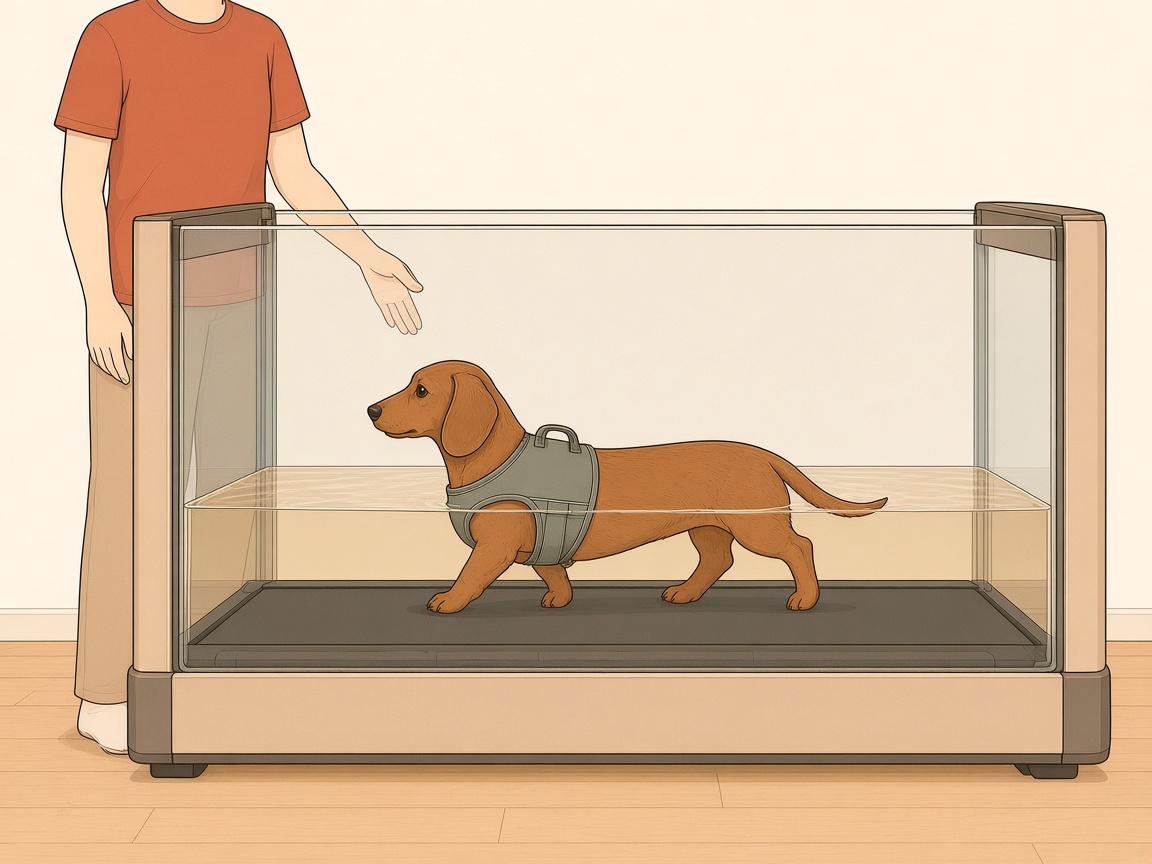
It can be a useful add-on after clearance, but it is not a replacement for rest, surgery decisions, or the land plan. A backyard pool, a lake, or a bathtub is not the same thing, and unsupervised swimming can lead to twisting, fatigue, or panic. Does hydrotherapy help after IVDD? covers treadmill versus swim, timing, and questions to ask.
When it fits: when the surgeon or treating veterinarian, often with a rehab veterinarian, has cleared that kind of session. Do not shorten crate rest because a water session was offered.
When to stop: the team will stop a session if form falls apart, if your dog panics, or if pain shows. Call if walking, comfort, or urination is worse afterward.
What not to add on your own
Until the treating team says otherwise, keep jumping, stairs, rough play, off-leash running, and tight turns out of the program. Those movements can twist or flex the spine quickly, or load it before the muscles are ready. Tight weave patterns, bounce jumps over poles, and chase games belong off the list.
Do not copy a video or another dog's routine. The same exercise can be useful in one phase and a poor fit in another.
Cookie stretches, where a treat lures the nose toward a shoulder, hip, or other point while the feet stay planted, need a specific OK. They move the neck and spine, including bending and side-bending. If your rehab veterinarian includes them, stay inside a comfortable range, keep the feet still, and start with a small reach, not a stretch toward the feet. If the feet shuffle, the back rounds, or your dog resists, stop. This is not a flexibility contest.
Before you move on
- Get written clearance, and ask a rehab or orthopedic veterinarian to set the exercises if you can
- Confirm which exercises are cleared for this phase, including any cookie stretches
- Use a nonslip surface, the prescribed support, and one change at a time
- Stop for pain, knuckling, trembling, fatigue, or worse walking or urination, and call the treating team
What caregivers ask
When can we start strengthening after crate rest?+
When the treating veterinarian says this dog is ready, and not before. Clearance of crate rest is not automatic permission to start every exercise listed here. Ask which ones start now, which ones wait, and what the first walk and home session should look like.
Can I follow a video I found, or a plan that helped another dog?+
No. Use only the exercises your veterinarian or rehab veterinarian has prescribed for this dog and this phase. A routine that looks simple can still be the wrong dose or the wrong movement for a spine that is still healing.
Are cookie stretches safe after IVDD?+
Only if your rehab veterinarian has prescribed the direction and the range. They bend the neck and spine. Keep the feet planted, stay inside a comfortable range, and stop at any sign of pain or resistance. Do not work toward a deeper reach on your own.
Do we have to see a rehab veterinarian, or can our regular vet set this up?+
A regular veterinarian can set limits and may prescribe early work. A veterinarian with rehabilitation training, or a credentialed canine rehabilitation professional working under veterinary supervision, can show you hand placement, form, and a progression. If you can connect with that kind of clinician, it is worth doing, as Erinn describes in Phaser's story.
What if my dog gets tired, trembles, or knuckles during a session?+
Stop that exercise. Let your dog rest in a limited, safe space, and contact the treating team before you repeat the work or make it harder. Knuckling, new pain, weaker walking, or a change in urination needs a call, not a harder session the next day.
Is an underwater treadmill required?+
No. It is one clinic tool, useful for some dogs after clearance, and not a requirement for a good land plan. If it is not available or not a fit, ask what to do at home instead. See Does hydrotherapy help after IVDD?.
Sources & further reading
We favor peer-reviewed consensus guidance and established veterinary specialty organizations. Links open the original source.