IVDD can't keep a champion dog down
Phaser has earned most of his titles since his 2023 IVDD injury, through two IVDD episodes, crate rest, MRI and PLDA. Here is their story.
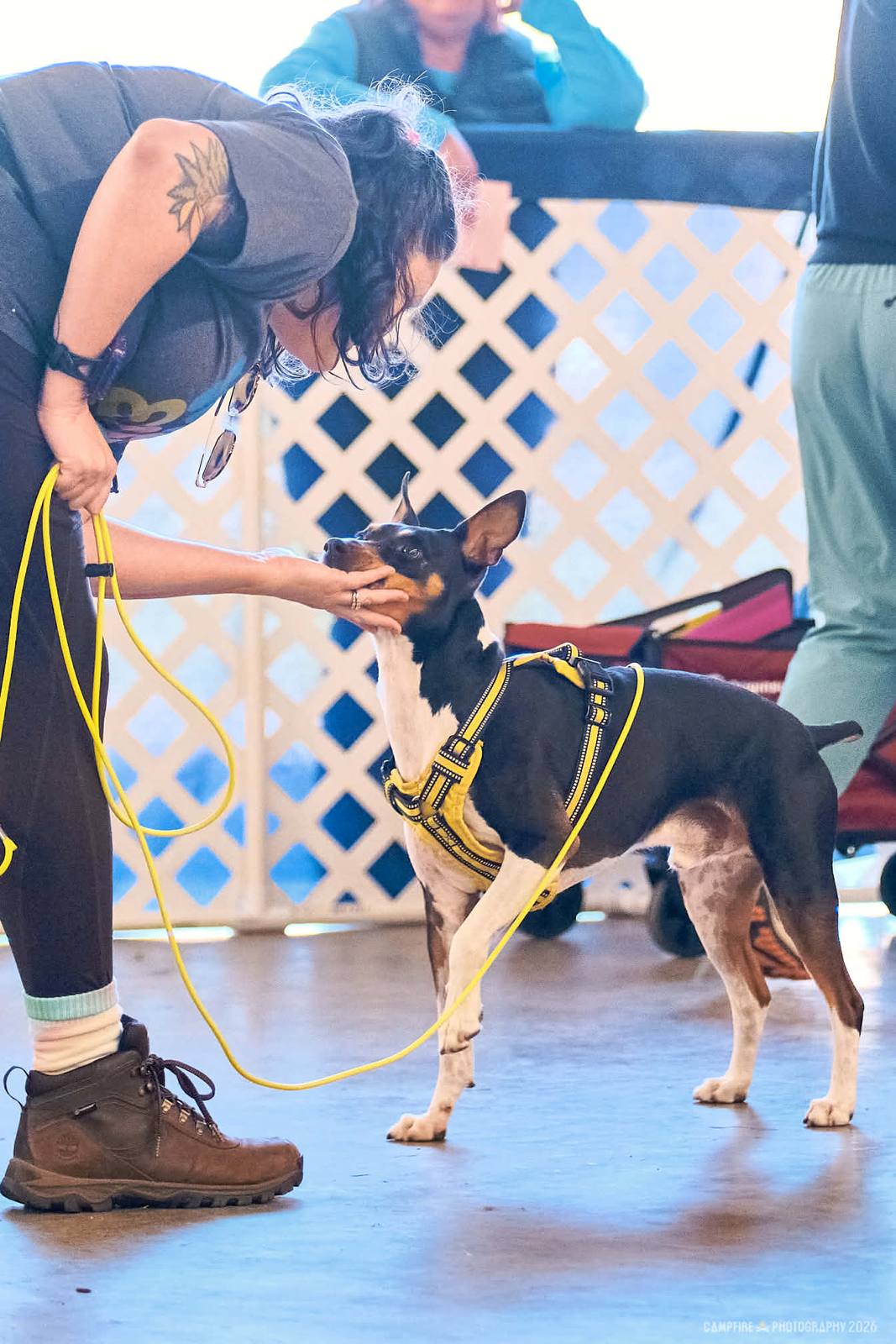
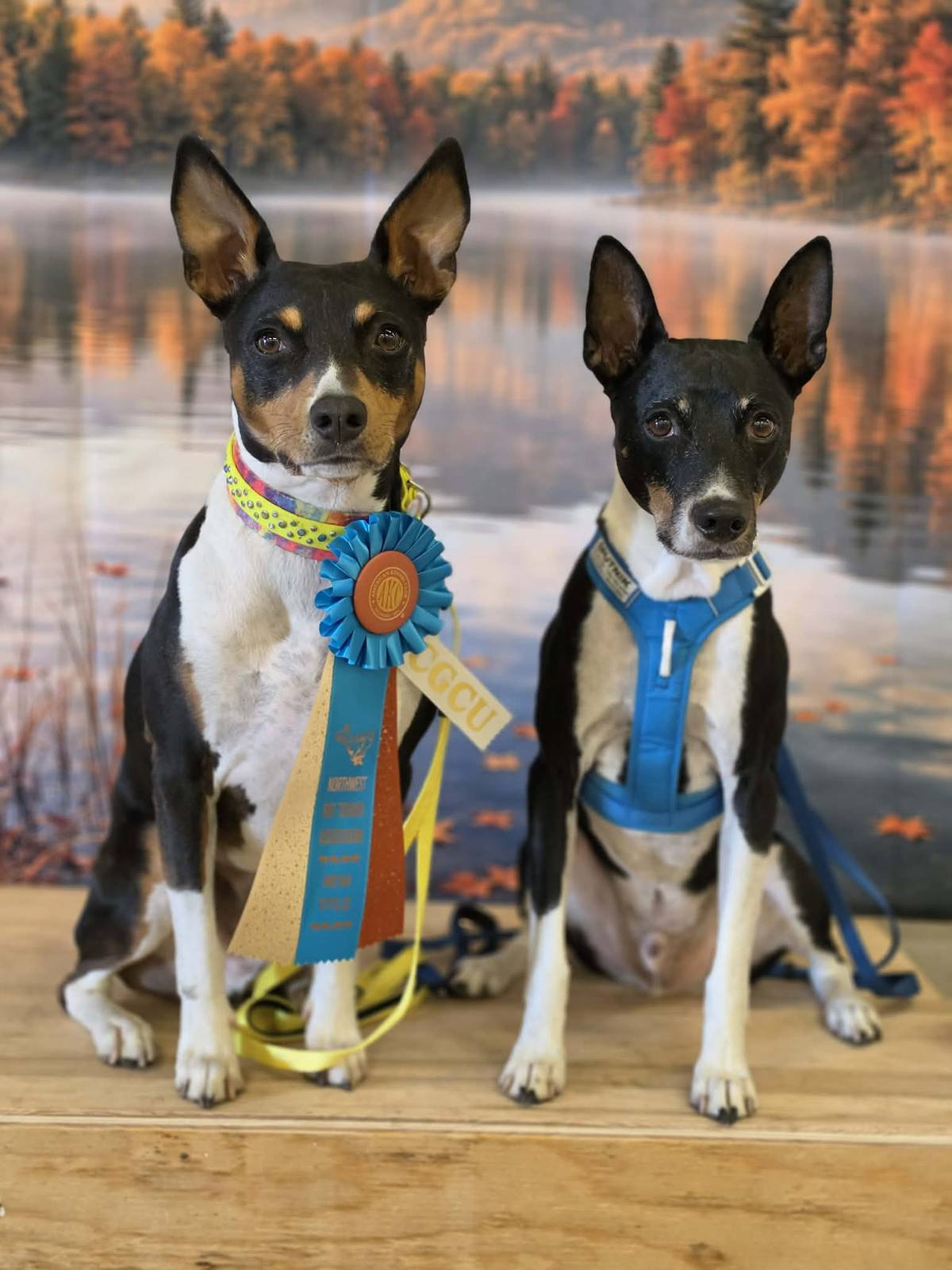
Photo provided by Phaser's owner, taken by Campfire Photography.
The experiences, advice and opinions on this page are Erinn's, not a veterinarian's, and not Tendi's guidance. Every dog and every situation is different, so work with your vet and a veterinary neurologist on the right plan for your dog.
Phaser at a glance
- Dog: Male standard rat terrier, 7 years old, about 30 lb. A highly titled performance and sport dog, retired from high impact sports after his first injury.
- Name: After the phaser from Star Trek.
- Diagnosis: IVDD in the back, confirmed by MRI. Six discs herniated across two episodes. A second MRI showed every disc in his lumbar spine was deteriorating.
- Neurologic status: At his worst, stage 2 going on stage 3. He never lost bladder or bowel control or deep pain sensation. He now has severe spinal stenosis and some lasting difficulty going to the bathroom.
- Treatment path: Conservative care (strict rest and medication) for both episodes, no decompression surgery. Then PLDA, a laser procedure to lower the chance of more discs rupturing.
- At this update: "He's doing really, really, really well."
Timeline
| When | What happened |
|---|---|
| About 8 months old | Looking back at photos, Erinn sees a hunched pain posture in his mid back. |
| About 2 years old | What everyone thought was a hip flexor muscle injury. Erinn now thinks it was his first disc problem. |
| 2023, age 4 | On a hike, he goes down. Three discs herniated in his mid back. MRI, then conservative rest. He recovers well. |
| November 2025 | Second episode. Three more discs, one each in his neck, lower back and the base of his spine. |
| About 8 weeks later | Still in pain, so a second MRI. It shows widespread disc degeneration. |
| After the second MRI | Erinn learns about PLDA, and they make a very long drive to Stillwater, Oklahoma, for the procedure. |
| About 4 and a half weeks after PLDA | Phaser is fully back to normal. |
1. Meet Phaser
Erinn works with dogs for a living and does dog sports. "My clock is dogs 24 hours a day," she says. She has known a lot of dogs.
"Phaser is the smartest dog I have ever met in my life. Which makes him very incredible and can also make him pretty complicated." He is a sensitive guy with big feelings, she says, and "brilliant and hilarious."
Ask her for his favorite quirk and she can't pick one. "Everything he does is a quirk. I couldn't even name one. He's hysterical. He's like a little human."
We laugh every day.
2. Signs, looking back
"We didn't necessarily realize this at the time," Erinn says, "but now with all the information that we have, the first signs of trouble with his spine started when he was like 8 months old." In old photos, she can see the telltale hunched pain posture in the middle of his back.
At about 2 years old, he had what everyone thought was an injury to a hip flexor muscle (the iliopsoas). "I think that was misdiagnosed," she says, and likely his first inflammation of a disc, "if not herniation."
3. A U-turn on a flat trail
In 2023, when Phaser was 4, the family was hiking, about a mile and a half into the woods. They had been running on a flat trail and stopped to turn around.
"He just walked in a U-turn. Not like running or anything, just was walking. And as he got flipped around the other way, cried out, and then that was it." He could not walk without help.
It was not a dramatic fall. Erinn says their neurologist told them that is how it happens for most of the dogs he sees: "it's not a big explosive moment."
They went straight to the emergency vet for an x-ray and a neurological exam. The vet suspected IVDD. Because Phaser was wobbly and could not walk on his own, they went ahead with a neurologist and an MRI. Three discs had herniated in his mid back.
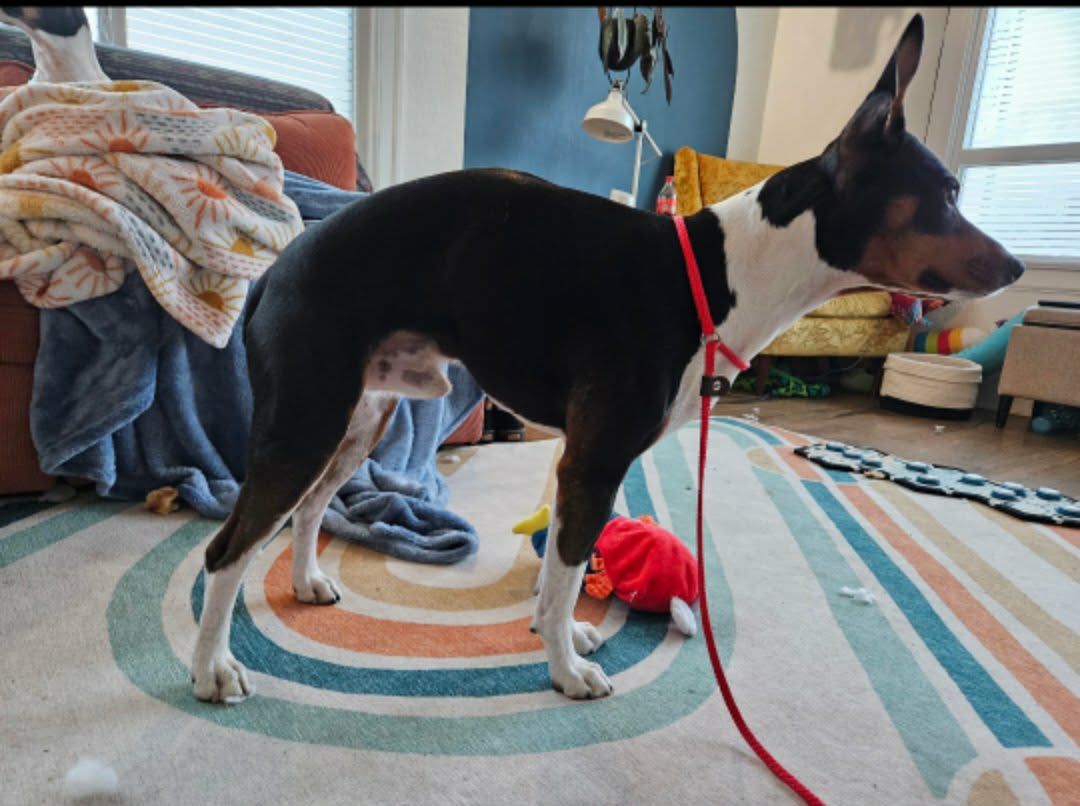
The neurologist did not think he needed surgery. They treated him with conservative rest, and "he recovered really, really well."
See IVDD emergency signs and severity grades.
4. A second episode, and a second MRI
Phaser went down again in November 2025. This time he was stage 1. His movement was affected for only a few days, "but he just had a lot of pain." Three more discs had herniated: one in his neck, one in his lower back and one at the base of his spine. They think the lower back disc was the problem. Because his neurological signs were mild, they again chose not to do surgery.
They did not rush to an MRI this time. They did a full eight weeks of standard management first. "The only reason that we pursued a second MRI was because he was just simply not healing well and was continuing to have pain."
That MRI showed that basically every disc in his lumbar spine was deteriorating. The neurologist brought them into his private office to show them.
For a dog with Phaser's history, Erinn found the MRI information useful. But she also says that for a dog that is not severely affected, "the answer is still conservative management" whether you do the MRI or not. For her, cost and the extra stress on the dog matter. If a dog is not at a grade that needs surgery, she would start with conservative care.
5. Crate rest that worked for a smart, busy dog
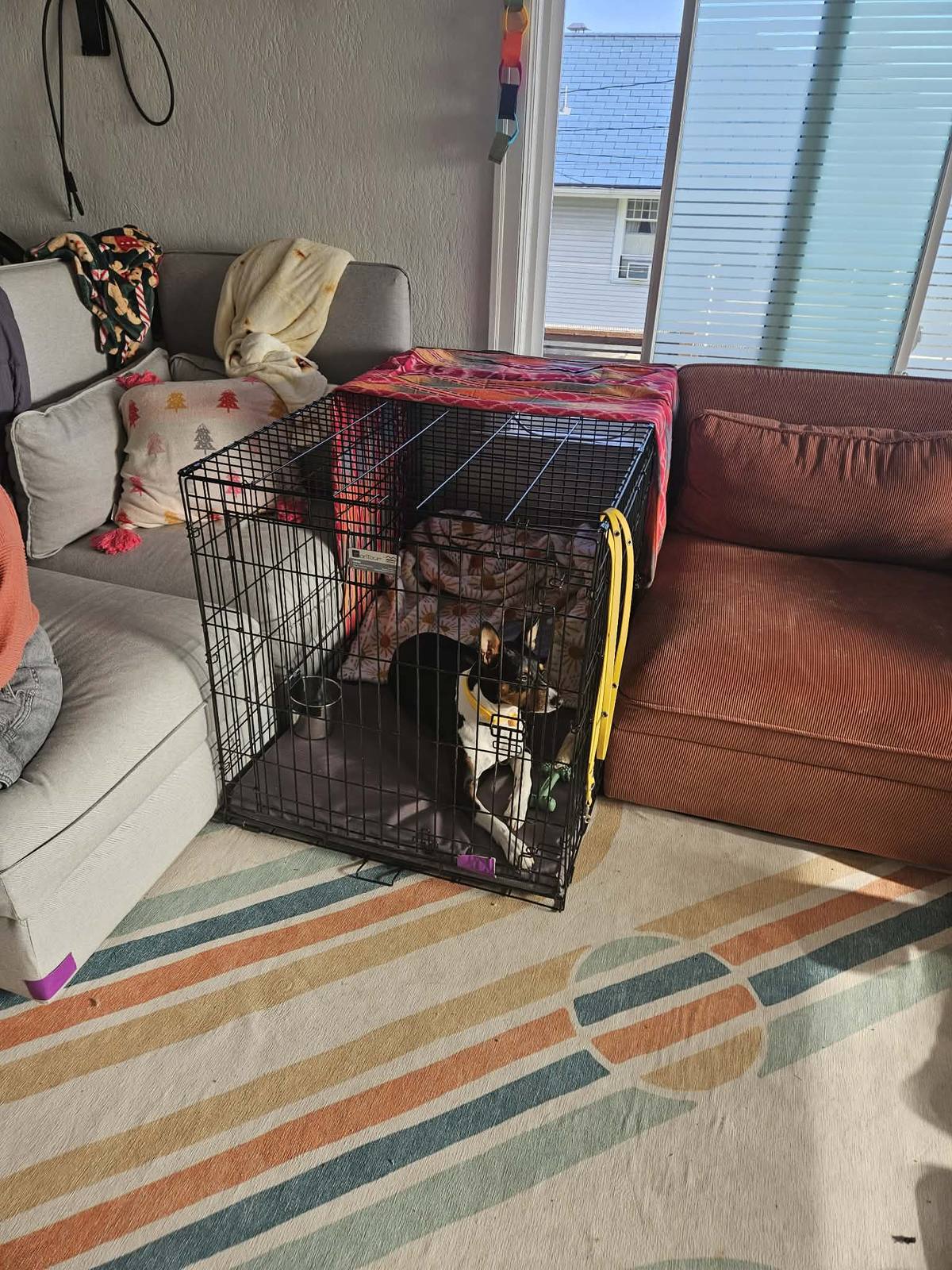
Their neurologist told them a common mistake is a space that is too small. Dogs need room to stretch out flat while they heal. For Phaser, about 30 lb, they used a very large wire kennel with one cushy bed side and one flat side.
They rearranged the living room so his big crate sat between sections of the sofa. "When we were all sitting around, lounging together, he could still feel like he was part of it."
Later, once he was more healed and getting antsy, they fenced off a section of the sofa so he could lie there with them, with no chance of jumping off. "We famously called that sofa jail." Friends who missed him could sit in there and visit safely.
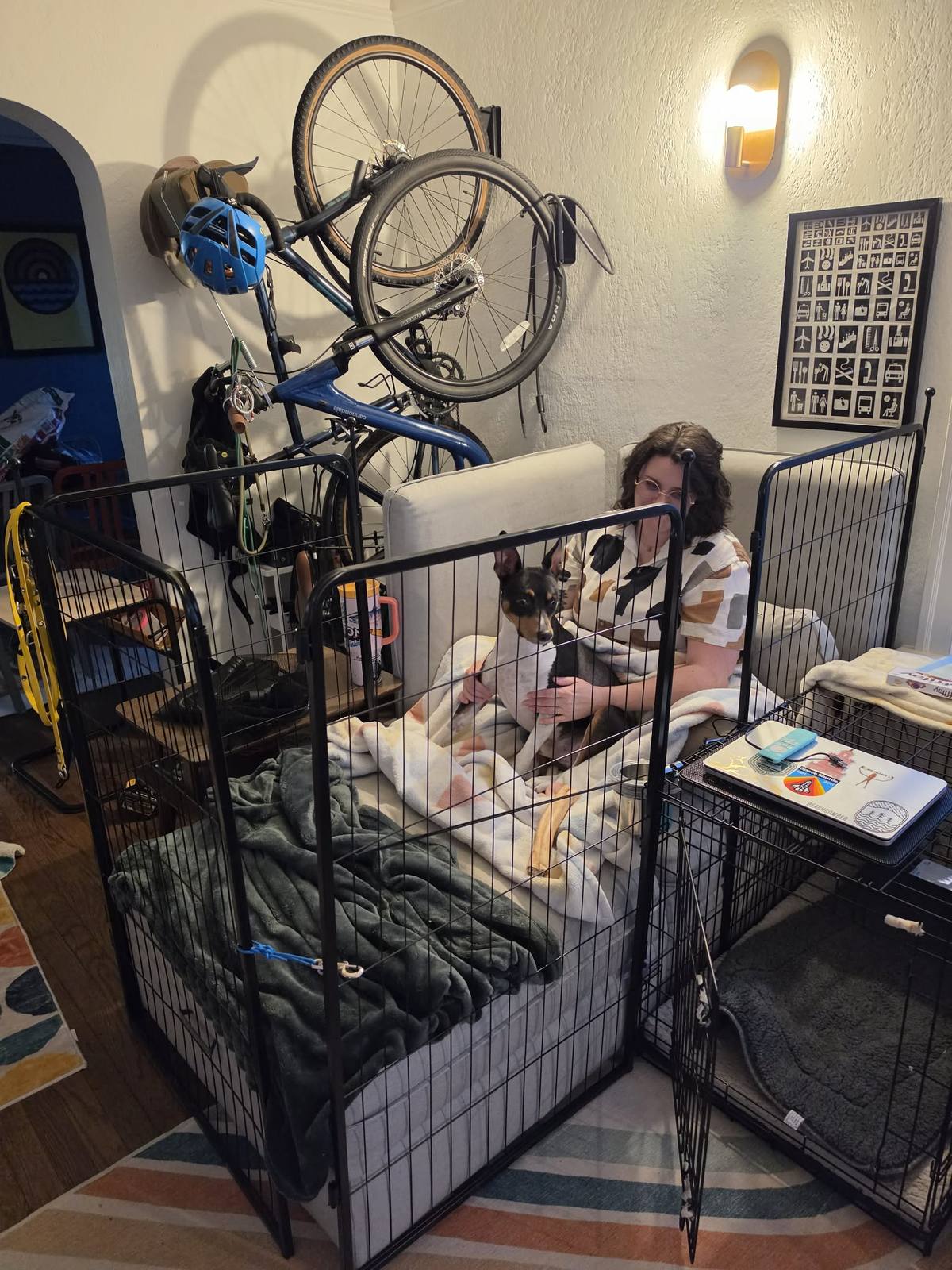
We famously called that sofa jail.
Other things that helped, in Erinn's words and experience:
- A window. His main rest area was by a window, and they opened it a little every day "so that he could get some fresh air and some smells from outside."
- Small changes. Swapping beds and changing things up "so that it wasn't the exact same thing every single day."
- More than one rest spot. His main crate, sofa jail, another crate in Erinn's office, and an area in the bedroom at night. Moving him between them "helped with the stir crazies" considerably.
- Wire kennels, not an open top pen. A high energy dog like Phaser "would certainly jump out" of an open top playpen. Wire kennels also give good airflow. Theirs has a front door and a side door.
- Every meal as enrichment. Food toys and lick mats, with his kibble soaked soft, so he had something to work on lying down without extra treats that could add weight.
- Carrying him everywhere. They live in a 107 year old house with many stairs. They carried him to the yard, between rooms, and up and down the stairs every day.
6. Facebook was so helpful
After the second MRI, the picture was hard. The first three discs had deteriorated, the new lower back disc was bad, and "every other disc in his lumbar spine was in progress" toward herniating. "And that was just from what we could see," Erinn says. "They didn't even look at his whole neck."
Phaser had already been retired from high impact sports. "It's one thing to have a dog staring down this diagnosis," she says, "and another thing entirely to have a very driven, high energy dog who needs a job with this diagnosis."
"I just didn't know what to do." She asked in a Facebook group whether anyone had been through a diagnosis like this. Someone recommended PLDA, percutaneous laser disc ablation. She had never heard of it.
I always say some random lady in a Facebook group saved my life.
Erinn did her research and talked to their neurologist and their regular vet before they got in touch with Dr. Dugat in Stillwater, Oklahoma. There are several vets around the United States that do the procedure, Erinn says, and Dr. Dugat is "the vet that has done most of the research. If you look at the research papers about PLDA, many of them are authored by her." Their neurologist had never had a patient who had the procedure, "but he had seen them talk about it at the conference," so he was familiar with it.
Learn more in PLDA for dogs.
7. What PLDA was like
Here is how Erinn describes it. Under live x-ray, the vet inserts needles into the discs along the middle and lower back and sends a laser down into each disc. "It essentially vaporizes, liquefies the middle of the disc." The body heals that by forming scar tissue, which makes the disc "much harder and thicker." So it is "significantly less likely to herniate because it's less jelly now, if that makes sense."
"Which sounds crazy and sounds so weird," she says. "But it's pretty well researched."
There is no surgical incision. "It is so non-invasive," Erinn says. It was quick, and it "seemed to be pretty painless for my dog." He was "pretty stiff and sore for a few days," but "very fast and easy recovery."
The plan was about two to three weeks of rest, she says. Phaser took longer. The lower back disc that had herniated sat in an awkward spot, one where surgery would have meant moving his spinal cord, "so that's not ideal." That disc caused a little extra inflammation, and he needed about four and a half weeks before he was fully back to normal.
Compared to "the years and years of conservative rest and potentially being paralyzed," she says, it was not a big deal.
8. The benefit she didn't expect
"The PLDA was life changing, absolutely life changing for us," Erinn says.
One benefit surprised her. Some of Phaser's discs had not yet herniated but were getting ready to. "There was pressure building up inside those discs, and treating him with PLDA took that pressure off. And so he feels much better now."
It's been quite a gift.
PLDA can also be done as prevention in dogs that have never had an episode, she says, such as high risk breeds like French bulldogs, dachshunds and toy poodles.
She is surprised more owners don't know about it. "I can't believe that it's not more commonly known in the IVDD dog neurology community." Not many vets offer it, she says. "It's such a specialty thing."
It was a very long drive to Stillwater. "I would do it again tomorrow because it has made his life so much better, and it's really been a huge, huge relief to us."
9. The hard parts
"It's not easy for any of us to see our dogs in pain," Erinn says. It can also be isolating. Suddenly losing dog sports meant losing many of the things that brought them joy, and much of their community.
"There was sort of layers of grief." Even owners who don't do sports go through a version of it, she says. "Of course you're upset that your dog is hurt. You have lost what your life was before this."
For Phaser, the hardest stretch of rest was "a point where they really feel like they feel better, but they're not done resting." And the lifestyle changes afterward are still hard. "They don't understand why they used to be able to jump and now they can't. They don't understand why we're interrupting their play all the time."
What helped was other people. "We have found a lot of new community in other people with IVDD dogs, and that has been a huge help for us." They have also come up with new "jobs" for Phaser and new ways to enrich his life that are easier on his body.
You have lost what your life was before this.
10. Phaser today
"He's doing really, really, really well. I am so grateful."
After his first injury, Phaser had to retire from high impact sports. He did not stop earning titles. Erinn finds it "very inspiring to note" that he has earned most of his roughly 55 sport and performance titles since his 2023 IVDD injury, the stage 2 episode that first took him off his feet.
Erinn's advice for other owners:
- Consider PLDA. "Anybody who has had a dog with a herniated disc, especially if you've had to do surgery, especially if you have any thought that there's some deterioration, consider the PLDA procedure, because that has been a huge gift."
- PEMF therapy. She strongly recommends it. It "really significantly improves" Phaser's pain and mobility day to day, and they used it a lot during rest. They use a PEMF dog bed every day.
- Strengthening after recovery. Connect with a rehab or orthopedic vet if you can, and work on strengthening. "I've noticed a significant improvement in his movement and his day to day sort of aches and pains" from a modified fitness program aimed at his back muscles. "A lot of people, once their dog recovers, they're just super afraid to let them do anything, but that muscle atrophy can actually be worse for their spine in the long run." See core and back strengthening after IVDD recovery.
- Crate rest first. When IVDD is suspected, "a few weeks of crate rest is not going to hurt anything," she says, even if you can't afford more complex tests or a specialist.
I'm screaming (PLDA) from the rooftops.
For readers in dog sports: Phaser's registered name is AlCH IntCH AC NN Waterwheel Creek's Set To Stun CA DCAT SWM SCME RATN TKE ATT VHMA CGCA FDC FITG ORT NW1 L1E L1I VRTX SD-I TL-I. These are his sport and performance titles.
Start with the guide that matches the hard part.
If your dog suddenly cannot walk, cries out in pain, or cannot pee, call a vet or emergency clinic now. A story cannot replace an exam.
This story, and the advice and opinions in it, are Erinn's, from her experience with Phaser. They are not a veterinarian's, and they are not Tendi's guidance. Work with your vet and a veterinary neurologist on the right plan for your dog.