Paralyzed overnight, walking after surgery: Zero's story
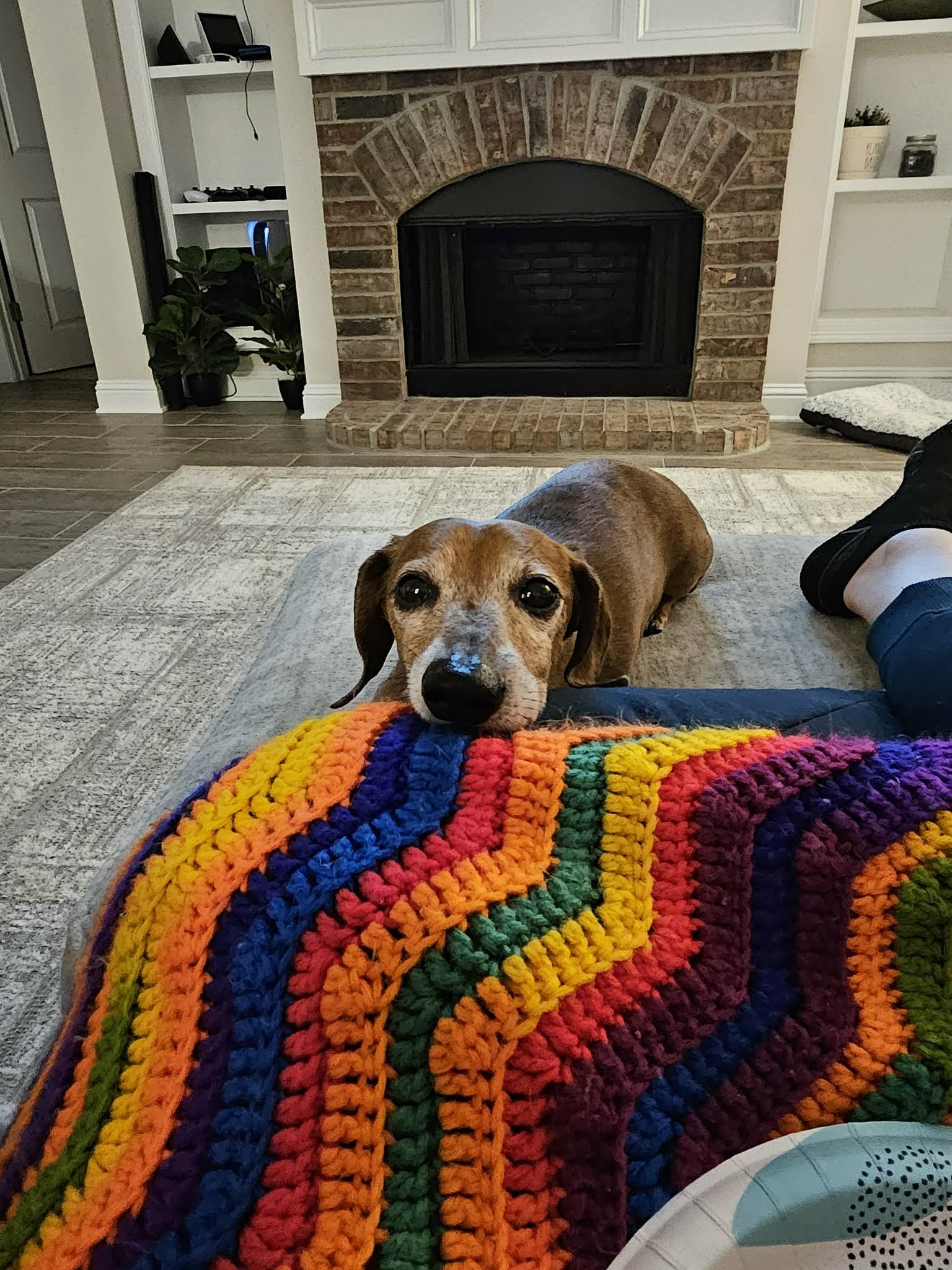
Zero is a kind, easygoing dachshund who got through IVDD with strict crate rest more than once. Then one day he could not move his back legs at all. Kimberly shared with us what surgery and the weeks after were really like.
The experiences, advice and opinions on this page are Kimberly's, not a veterinarian's, and not Tendi's guidance. Every dog and every situation is different, so work with your vet and a veterinary neurologist on the right plan for your dog.
Zero at a glance
- Dog: Purebred male dachshund, 13 years old.
- Diagnosis: IVDD in his back, with several episodes over the years.
- Treatment path: Strict crate rest for at least two episodes, maybe three, then emergency surgery after he became fully paralyzed.
- Neurologic status at his worst: Stage 5. No feeling in his tail or feet.
- Where he had surgery: The Texas A&M veterinary teaching hospital.
- At this update: Walking most of the time, with one stiff back leg, and no new episodes in years.
Timeline
| When | What happened |
|---|---|
| Before his first injury | Zero is quieter, more subdued and eating less. |
| About age 6 or 7 | First back injury. Twelve weeks of strict crate rest. He recovers. |
| Within about a year | The disc is injured again. Another twelve weeks of crate rest, and Kimberly believes a third round later. |
| One August, about two years ago | After a jump off the bed, Zero is found fully paralyzed. |
| The next day | Kimberly decides on surgery. |
| About three days after he went down | Surgery at Texas A&M. |
| Twelve weeks after surgery | Confinement ends, with rehab along the way. |
| Today | Walking most of the time, no new episodes. |
1. Meet Zero
Zero is a purebred dachshund, and at 13 he is still the same easy dog he has always been. "He's not aggressive at all. He's very kind, he's very relaxed, he's good with kids," Kimberly says. "He's always been a really good dog."
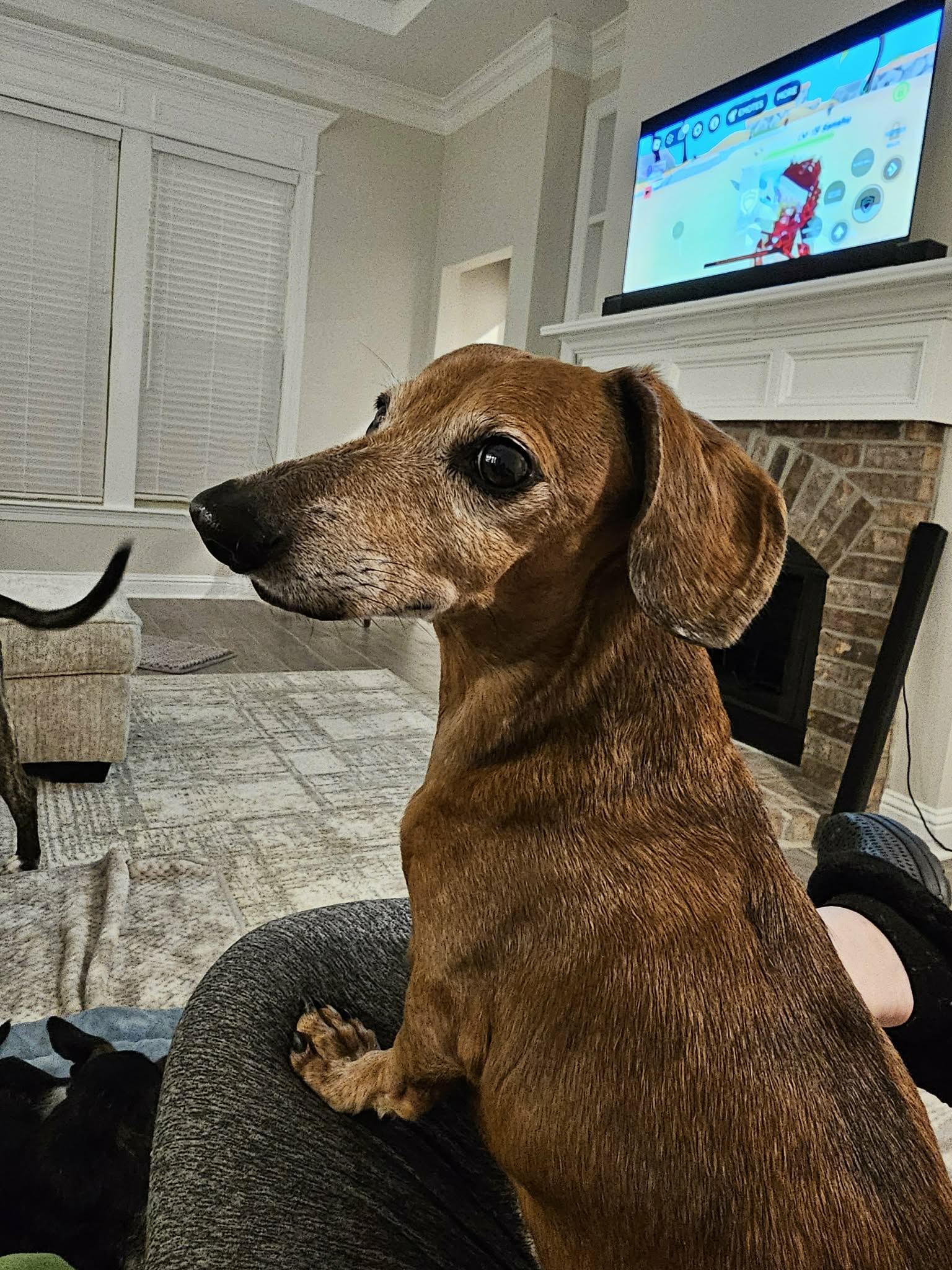
He's always been a really good dog.
2. Quiet signs, then crate rest
Looking back, the early signs were easy to miss. "I would say that he just was more subdued," Kimberly says. "Just quieter, more subdued." He was also not eating as much before he hurt his back the first time.
His first injury came when he was about 6 or 7. Kimberly's vet at the time knew more about IVDD than most, she says, "but he still did not recommend the proper protocol." She did her own research and chose twelve weeks of strict crate rest, "so that the scar tissue would form over the disc."
Zero recovered. Within about six months to a year, the disc was injured again, and she did the same twelve weeks a second time. "And I want to say, I even went through it a third time."
3. How Kimberly did crate rest
Kimberly found her crate rest protocol on Dodgers list, an IVDD website, along with other owners' advice there. "I read through their protocol. And I just tried it because it made sense to me. It made the most sense to me." "I used a cage every single time for 12 weeks and I only took him out when he had to go to the bathroom, and that was it."
I used a cage every single time for 12 weeks.
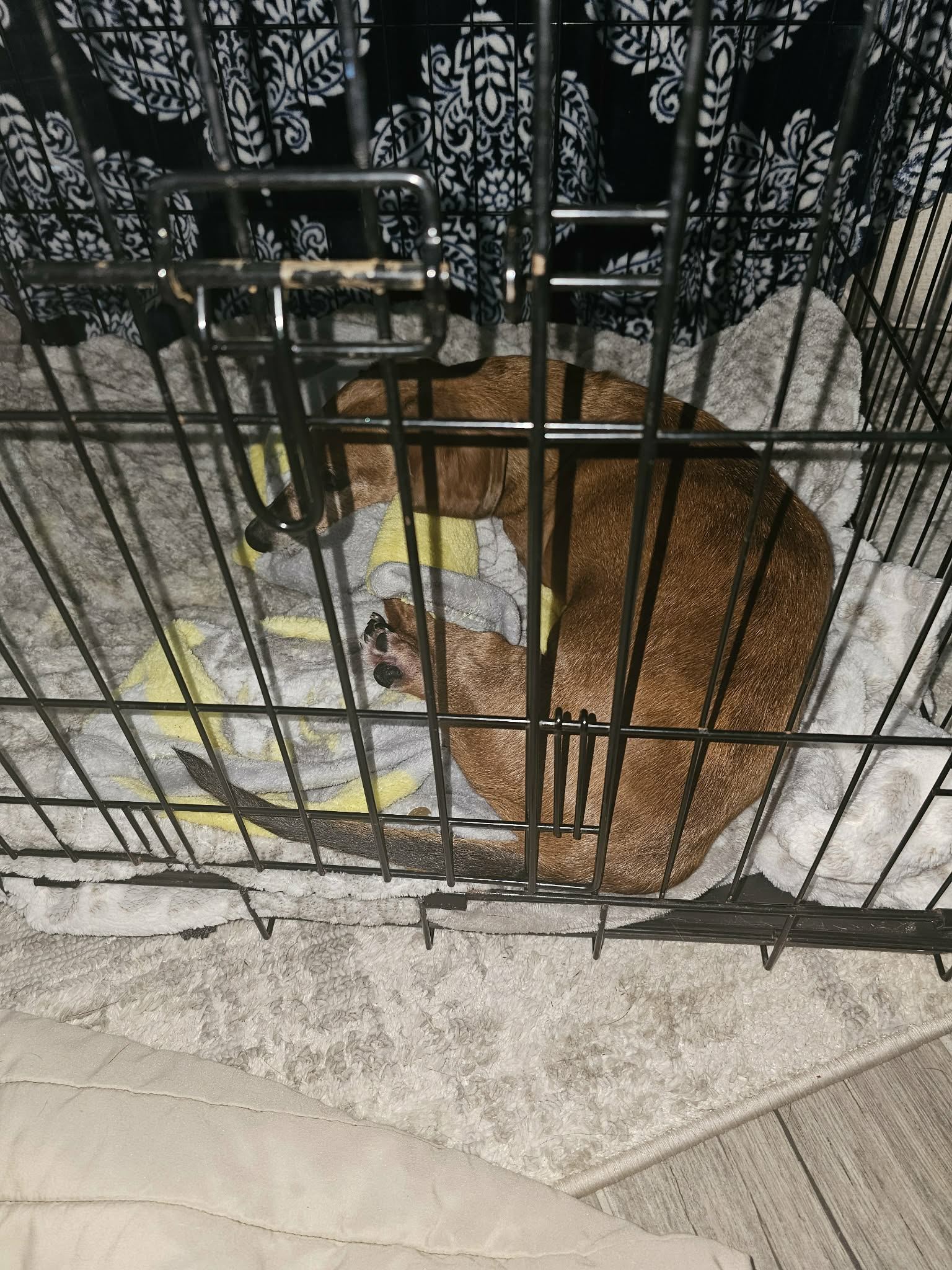
What that looked like, in her words and experience:
- A wire kennel in the living room. It was open on all sides, with a side door as well as a front door, "because you have to be really careful picking them up."
- Company. "Our other dog laid by the kennel and kept him company."
- A plain, flat floor. She kept the bedding the same all the way across. Her worry was that with too much in there, "he's going to get up and try to like dig," the way dachshunds do when they make a bed.
- A little lap time, later on. After a couple of weeks, she would set him on her lap "as long as I knew he wasn't gonna get up and fly off on me," for his morale. "But for the most part, I just kept him completely stationary."
- Heat for his sore back. His back "would arch up in pain," and during episodes she used a heating pad in short sessions of about ten minutes to relax his back muscles. "I always felt like that really helped. I swore by that."
- Medication and time. Her vet prescribed medication to keep him calm and comfortable, and he slept most of the time. She thinks the full time matters most. Owners see their dog standing and moving around after a few weeks, she says, and stop early. "Obviously we all do, but you have to stick with it."
Kimberly spends a lot of time in IVDD groups online. What she sees most often is dogs with "mild" signs left to walk around. "That is like a huge mistake," she says. "And if you continue to let the dog walk around, it can become paralyzed, and I've seen that so many times where I'm just like, if you would have just confined your dog."
She has also seen owners get poor advice. "What bothers me a lot is a lot of veterinarians are uninformed," she says. She has watched people bring in a dog that is in pain but not paralyzed and be told, "it's better if you just put the dog down." Some owners did, very soon after the diagnosis.
"I also saw multiple people euthanize their dogs when I felt like it was totally unnecessary, and I felt like their dogs could have healed just fine," Kimberly says. "That's such an old way of handling this disease."
See crate rest basics and crate types.
4. Fine one day, paralyzed the next
Through all of it, one thought stayed with her. "In the back of my mind, that's always like, it's only a matter of time before he becomes paralyzed." But she adds, "That's not necessarily the case for everyone. I do think he could have gone the rest of his life without becoming paralyzed."
That week, "you would never know he had IVDD," she says. He was walking around, getting his ball and full of energy. Then he jumped off her bed. She put him in his kennel while she went out, and he has separation anxiety. When she got home and opened the kennel door, he was fully paralyzed.
Totally fine, to boom, completely paralyzed, like night and day.
She knew it was stage 5 "because he couldn't feel anything, like you could squeeze his tail, squeeze his foot. He had no idea I was squeezing him."
They thought about it for one night, because "not everyone gets surgery because it's very expensive." By the next day, she had decided. "I think this time, we should probably try surgery because this is really serious."
5. Two very different clinics
The first clinic Kimberly took Zero to that day was a hard experience. She says the vet made him pull himself across the floor and told her that since he was already paralyzed, she didn't need to be careful with his back. "Which is not true," Kimberly says. She told the vet, "Give me my dog, I'm leaving."
Then she called the veterinary teaching hospital at Texas A&M. "They were like, no, this is an emergency, like bring them," she says. "They were completely opposite."
It took three days to get Zero there for surgery. "So we actually didn't get him in the first 24 hours, which you should do for the best outcome."
When the surgeons operated on his disc, they told her they could see scar tissue built up from all the times she had confined him. "They were like, we can see you must have confined them a couple times."
Kimberly also appreciated that the team there is "doing more research now on how to handle the disease," and "trying to be more innovative." She felt they "were more informed than everybody else."
No, this is an emergency, like bring them.
About Texas A&M's veterinary hospital. For readers who want to learn more, these are the hospital's official pages for its neurology and emergency services, plus its article on IVDD in dogs. Your own vet or a specialist near you can tell you what fits your dog.
- Neurology and Neurosurgery Service, Texas A&M Small Animal Teaching Hospital
- Small Animal Teaching Hospital, including emergency care
- Intervertebral disc disease in dogs, Texas A&M Pet Talk
See IVDD surgery, surgery or strict crate rest? and regular vet or veterinary neurologist?.
6. The first days home
Kimberly came home with paperwork and medication from the hospital. "And you know, the first 3 days, like I just wanted to give up and I was questioning, like, did I make the right decision? This is horrible."
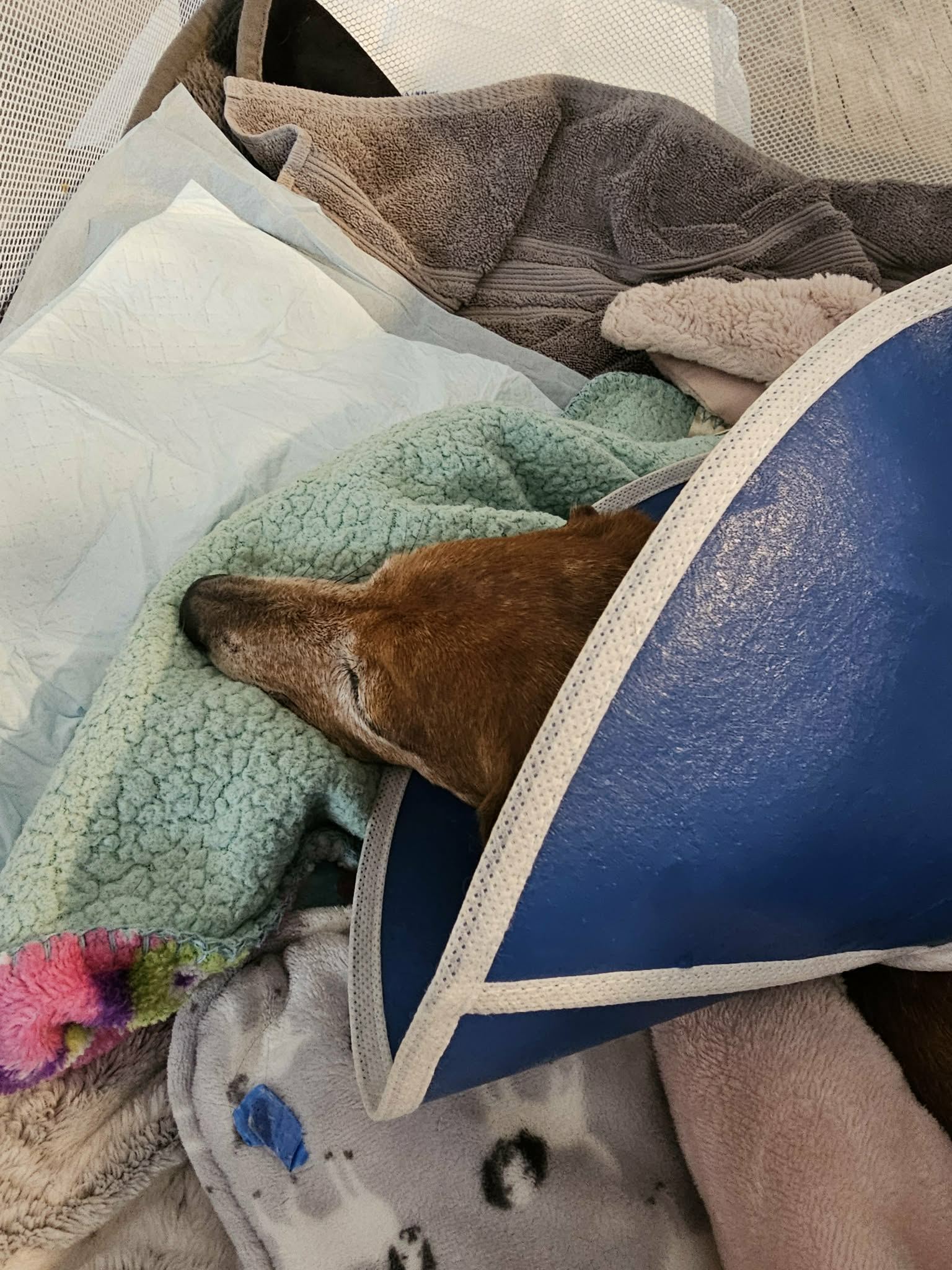
She has since talked with many owners going through the same thing after surgery, asking, "Was this a mistake? My dog's so miserable."
The first 48 hours are the hardest. It's not forever. You're gonna make it.
What caught her off guard was Zero's stomach. "Your dog's gonna have really bad diarrhea," she says, "from the medicine and the surgery," and he did not want to eat. She found simple foods he would eat. "I think just knowing to go get canned chicken, some simple foods, you know, your dog's gonna have diarrhea, your dog's not gonna want to eat."
Because Zero is a male, belly wraps and diapers were easier than pee pads alone. People "never thought to do that," she says. "That's so much easier than changing out a pee pad like every 5 minutes, 10 minutes."
7. A playpen they could sit in
After surgery, they used a big child's playpen, large enough for a person to sit inside with Zero. "That was the best thing we ever did because he was confined, but we could still sit with him." Other owners told her they had never thought of it.
That was the best thing we ever did.
She found the rules after surgery could be a little more relaxed than during crate rest without surgery, when the disc needs to heal and "your dog just cannot move around." Your surgeon will tell you what your dog's rest should look like.
See crate rest after IVDD surgery and playpens for crate rest.
8. A tail wag, then a foot
The hospital told Kimberly to keep Zero confined for 12 weeks after surgery and to start rehab after a set amount of time.
Then one day, his tail started to move a little. Later his foot moved in his sleep. From then on, she rubbed his foot and moved his leg every single day, "just trying to like wake up those nerve connections from his spinal cord."
After 8 weeks, she added acupuncture. "Now, some people say like it didn't work, but I think it did help." She thinks it depends a lot on who does it. Her vet had studied acupuncture and was really into it. "You really got to know what you're doing."
9. Zero today
Most of the time, Zero walks. The back leg on the side where he had surgery is contracted and stays straight, because he can't fully bend it, "but he still walks around." Sometimes he drags himself. "He doesn't care. He doesn't know the difference."
And since that surgery, "knock on wood, it's been years now since he's had any other episodes." No more rounds of crate rest, no more pain coming and going. "Now we're just the same all the time."
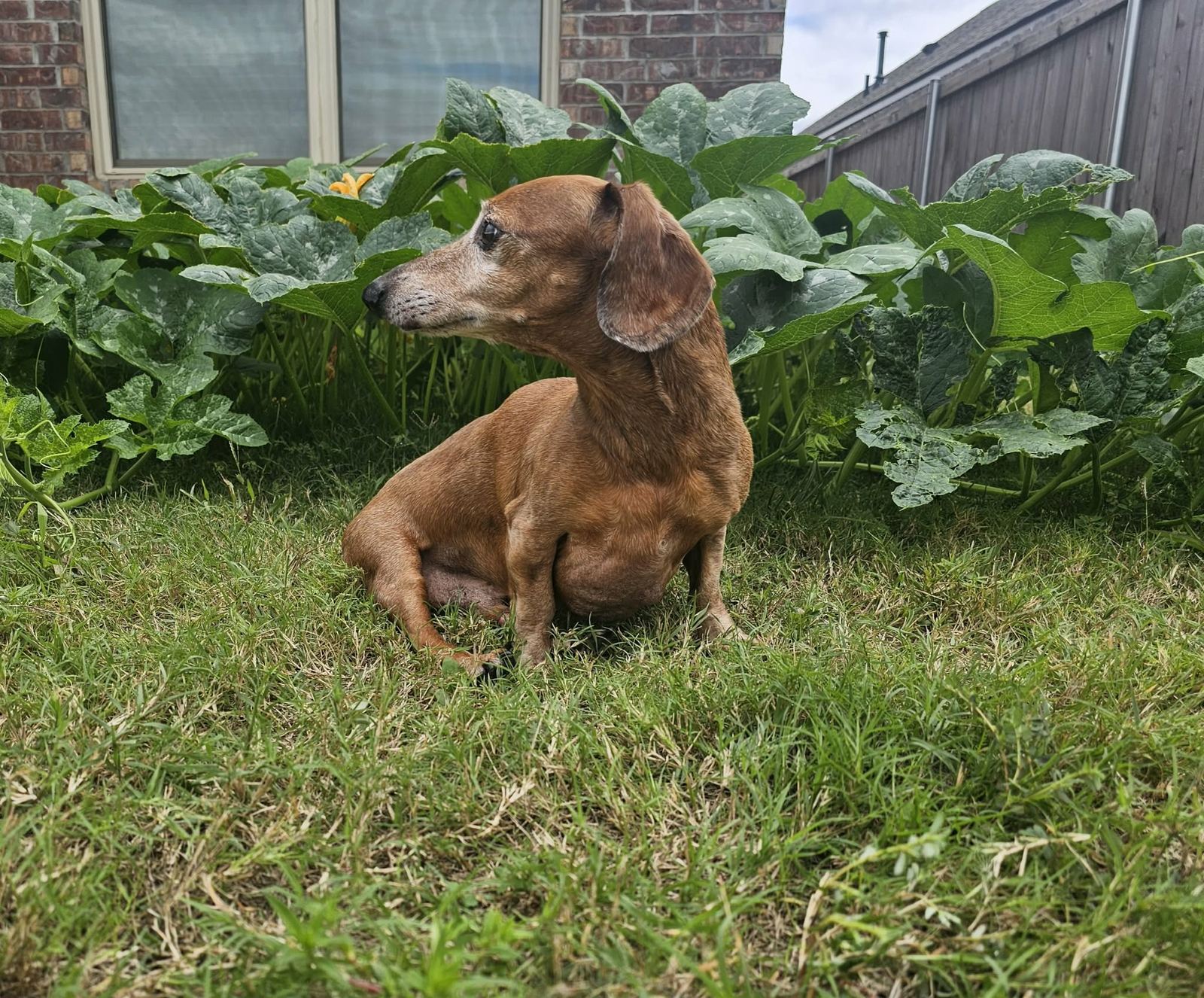
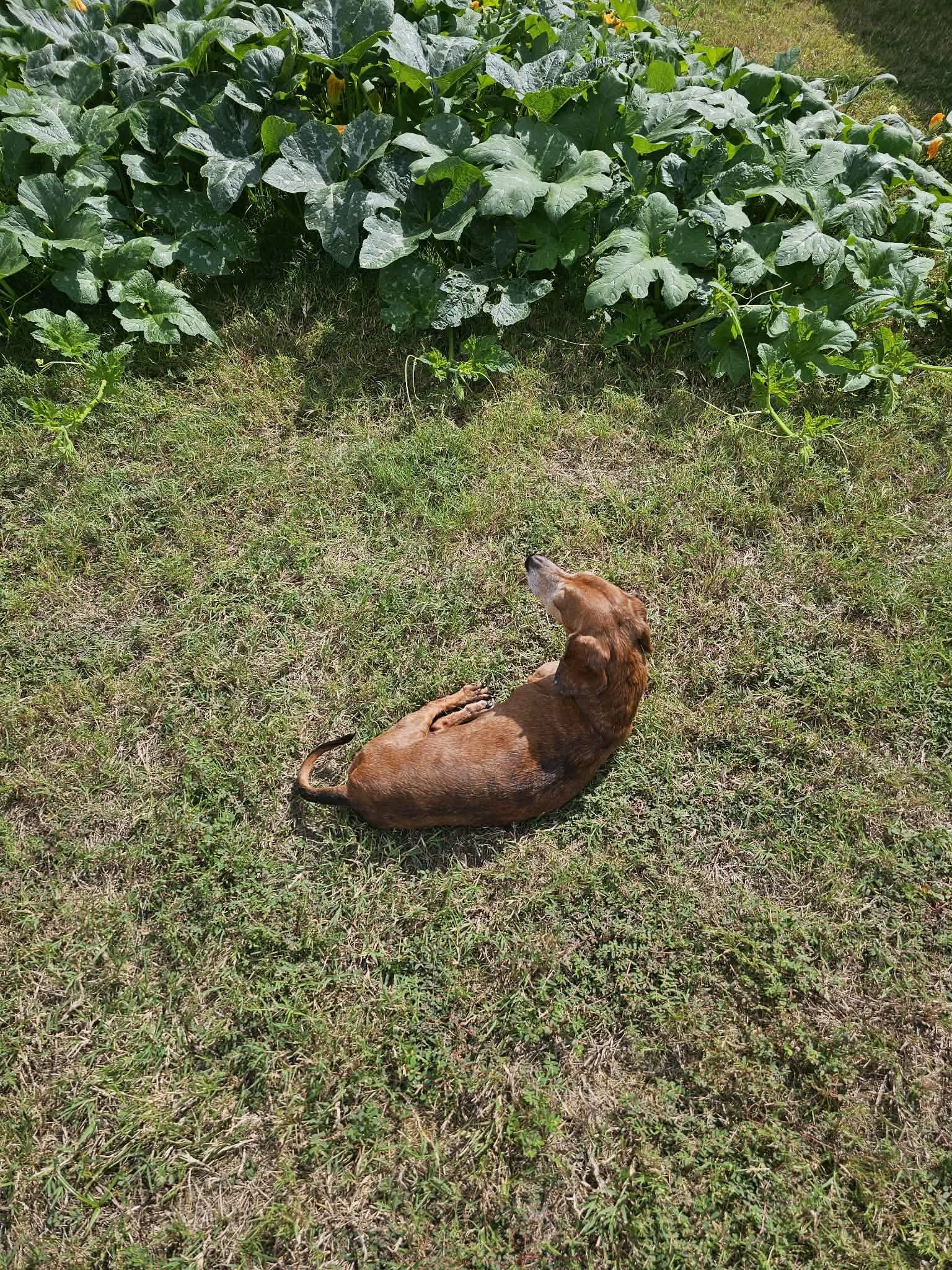
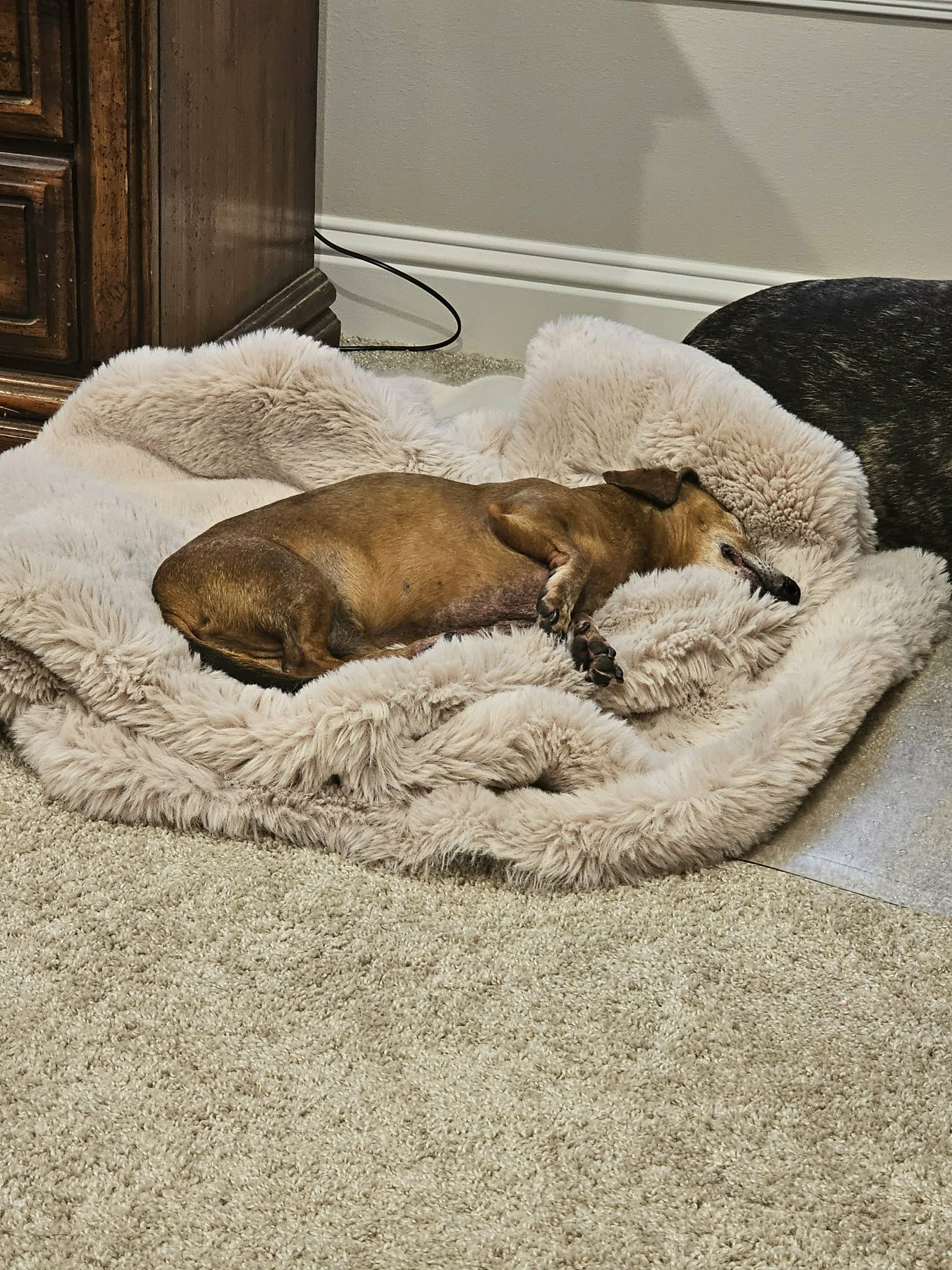
Paralyzed dogs can also be really happy too.
Kimberly's advice for other owners, whatever the stage or treatment: "If you can get your dog to a point where they're not in pain, and their morale's good, like, dogs don't know they're paralyzed. So just love your dog and let them live their best life."
"I think some people are so afraid of their dog being paralyzed," she says. "They don't realize that sometimes paralyzed dogs can also be really happy too."
She has also helped many owners in IVDD groups learn to express their dog's bladder, something she sees people struggle with a lot.
See bladder care, mobility aids and quality of life.
So just love your dog and let them live their best life.
Start with the guide that matches the hard part.
If your dog suddenly cannot walk, cannot feel their back legs, or cannot pee, call a vet or emergency clinic now. A story cannot replace an exam.
This story, and the advice and opinions in it, are Kimberly's, from her experience with Zero. They are not a veterinarian's, and they are not Tendi's guidance. Work with your vet and a veterinary neurologist on the right plan for your dog.